
Peak ATP: Benefits, Side Effects, and How It Supports Performance
In the world of sports nutrition and performance supplements, Peak ATP has become a popular ingredient for athletes, bodybuilders, and fitness enthusiasts looking to improve strength, endurance, and recovery. But what is Peak ATP? How does a Peak ATP supplement work? And are there any Peak ATP side effects you should know about?

In this comprehensive guide, we’ll explore everything you need to know about Peak ATP, including its benefits, safety, and how it supports ATP energy peak performance during training.
Table of Contents
What Is Peak ATP?
If you’ve been searching “what is Peak ATP,” you’re not alone. Peak ATP is a patented form of adenosine 5 triphosphate disodium (Peak ATP®), a supplemental version of ATP — the primary energy molecule used by your cells.
ATP stands for adenosine triphosphate, and it is often referred to as the “energy currency” of the body. Every movement you make from lifting weights to sprinting to simply walking relies on ATP.
Peak ATP® is a branded ingredient that delivers exogenous ATP (ATP from outside the body) in the form of adenosine 5 triphosphate disodium Peak ATP, designed to support muscular performance and recovery.
Unlike caffeine or stimulants, Peak ATP works directly at the cellular energy level, supporting the natural processes involved in muscle contraction and blood flow.
Understanding ATP and the Concept of ATP Energy Peak
To understand ATP energy peak, we need to look at how the body produces and uses ATP.
During high-intensity exercise:
- ATP is rapidly broken down for energy.
- Your body must quickly regenerate ATP to sustain performance.
- When ATP levels drop, fatigue sets in.
Reaching an ATP peak during training means your muscles have sufficient energy available to perform at maximum output. When ATP availability is optimized, athletes may experience:
- Greater strength output
- Improved endurance
- Better power production
- Faster recovery between sets
This is where a Peak ATP supplement comes into play.
How Does Peak ATP Supplement Work?
A Peak ATP supplement provides adenosine 5 triphosphate disodium directly to the body. While ATP from supplements does not simply “replace” your body’s ATP stores, research suggests it may help support:
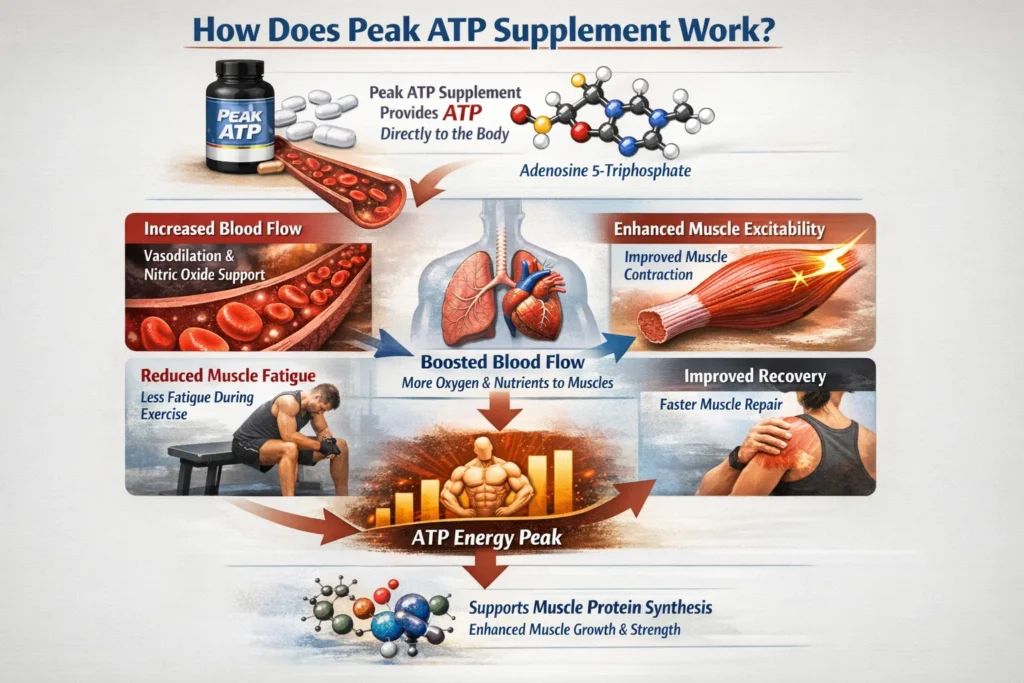
- Blood flow via vasodilation
- Muscle excitability
- Reduced muscle fatigue
- Improved recovery response
One key mechanism is nitric oxide support. Peak ATP may enhance blood flow, helping oxygen and nutrients reach working muscles more efficiently. This can contribute to that sought-after atp energy peak during workouts.
Additionally, Peak ATP has been studied for its ability to support muscle protein synthesis signaling, making it attractive for strength athletes and bodybuilders.
Peak ATP Benefits
Let’s explore the most talked-about Peak ATP benefits.
1. Increased Strength and Power
Several studies have shown that supplementation with Peak ATP may help improve:
- Bench press strength
- Leg press power
- Total lifting volume
By supporting ATP availability, muscles may sustain higher performance levels during resistance training.
2. Improved Muscle Endurance
When ATP is replenished efficiently, muscles can continue contracting at high intensity. This may allow you to:
- Perform more reps
- Extend time under tension
- Delay muscular fatigue
This contributes directly to achieving an ATP peak during training sessions.
3. Enhanced Blood Flow
Peak ATP may support vasodilation, which improves circulation to working muscles. Better blood flow means:
- More oxygen delivery
- Improved nutrient transport
- Faster waste removal
This effect supports overall ATP training peaks, helping athletes push harder during intense sessions.
4. Better Recovery
Another important benefit is recovery support. Some research suggests Peak ATP may help:
- Reduce muscle breakdown
- Support muscle repair processes
- Improve post-workout recovery
This can be especially beneficial for those training multiple times per week or following high-volume programs.
5. Non-Stimulant Energy Support
Unlike pre-workouts loaded with caffeine, Peak ATP does not stimulate the nervous system directly. Instead, it works at the cellular level, supporting natural energy production.
This makes it ideal for:
- Evening workouts
- Individuals sensitive to caffeine
- Stacking with other supplements
Adenosine 5 Triphosphate Disodium Peak ATP: Why It Matters
The full ingredient name, adenosine 5 triphosphate disodium Peak ATP refers to the stabilized form of ATP used in supplements.
ATP on its own is unstable when consumed orally. The disodium form improves stability and bioavailability, making it suitable for supplementation.
When you see this ingredient listed on a label, you’re getting the patented form specifically designed for sports performance.
Peak ATP Side Effects: Is It Safe?
A common question people search is: Peak ATP side effects.
Overall, research suggests Peak ATP is well tolerated when taken at recommended dosages (typically around 400 mg daily).
Potential Mild Side Effects May Include:
- Mild digestive discomfort
- Temporary flushing (rare)
- Headache (uncommon)
These effects are generally mild and not widely reported.
Unlike stimulants, Peak ATP does not typically cause:
- Jitters
- Rapid heart rate
- Sleep disturbances
However, as with any supplement:
- Consult a healthcare professional if you have medical conditions.
- Avoid use if pregnant or breastfeeding unless approved by a doctor.
Swanson Peak ATP and Other Supplement Options
If you’ve searched for Swanson Peak ATP, you’re likely looking for a reputable brand offering this ingredient.
Swanson is one of several supplement companies that may include Peak ATP in standalone capsules or performance formulas. When choosing a Peak ATP supplement, consider:
- Dosage (clinical studies often use 400 mg per day)
- Third-party testing
- Brand reputation
- Additional ingredients (stacked formulas vs. standalone ATP)
Some products combine Peak ATP with:
- Creatine
- Beta-alanine
- Citrulline
- Pre-workout blends
Always check the label to confirm the presence of adenosine 5 triphosphate disodium Peak ATP® specifically.
How to Use Peak ATP for ATP Training Peaks
If your goal is to maximize ATP training peaks, consistency is key.
Recommended Usage:
- 400 mg daily
- Taken pre-workout or consistently at the same time daily
- Can be stacked with creatine
Some research suggests benefits increase after several weeks of consistent supplementation rather than immediate acute effects.
Peak ATP vs Creatine: What’s the Difference?
Both creatine and Peak ATP support ATP production, but they work differently.
Creatine:
- Helps regenerate ATP inside muscle cells
- Increases phosphocreatine stores
- Well-established for strength gains
Peak ATP:
- Provides exogenous ATP
- May enhance blood flow and signaling
- Supports performance and recovery
Many athletes combine the two for complementary benefits.
Who Should Use a Peak ATP Supplement?
Peak ATP may be ideal for:
- Strength athletes
- Bodybuilders
- CrossFit competitors
- High-intensity interval trainers
- Competitive sports athletes
It can also benefit older adults looking to support muscle function and strength.
Frequently Asked Questions
What is Peak ATP used for?
Peak ATP is used to support strength, endurance, blood flow, and recovery by enhancing cellular energy availability.
How long does it take to see results?
Some users report benefits within weeks, but many studies show improvements after 8–12 weeks of consistent supplementation.
Is Peak ATP a stimulant?
No. Peak ATP works at the cellular level and does not stimulate the central nervous system.
Can Peak ATP help reach an ATP peak during workouts?
Yes. By supporting ATP availability and blood flow, Peak ATP may help athletes achieve an optimal ATP peak during high-intensity training.
Final Thoughts: Is Peak ATP Worth It?
If your goal is to optimize strength, power, and performance naturally, Peak ATP offers a science-backed, non-stimulant approach to supporting cellular energy.
From enhancing ATP energy peak performance to improving recovery and endurance, the documented Peak ATP benefits make it a compelling addition to serious training programs.
While Peak ATP side effects are generally mild and uncommon, it’s always wise to follow recommended dosing guidelines and consult a healthcare provider when needed.
Whether you’re exploring Swanson Peak ATP, researching adenosine 5 triphosphate disodium Peak ATP, or simply asking what is Peak ATP, one thing is clear: optimizing ATP availability is central to unlocking your physical potential.
If maximizing performance and achieving consistent ATP training peaks is your goal, Peak ATP may be the missing piece in your supplement strategy.

With a Bachelor’s in Biology and Health and a Master’s degree in Quality Control of Foods and Drugs, I review dietary supplements using scientific analysis, ingredient verification, and safety standards to provide transparent and reliable recommendations.