OxyShred Energy Drink Review: Ingredients, Caffeine, Flavors, Taste & Who It’s Best For
If you’re searching for an OxyShred energy drink review because you want a “pre-workout style” energy drink without sugar, OxyShred Energy (RTD) is one of the more supplement-like options on the shelf: it’s lightly carbonated, includes amino-acid-style ingredients (like taurine + tyrosine), vitamins/minerals, and a fairly strong caffeine hit in the U.S. version.
Important: formulas and label panels can vary by country, flavor, and retailer listing, so always check the can you’re actually buying. (Even major retailers explicitly warn that online label info may change.)
Table of Contents
Quick verdict (for busy readers)
My take in this OxyShred energy drink review:
- Good pick if you want zero sugar energy with a more “functional beverage” ingredient list than a basic caffeine drink.
- Watch-outs if you’re caffeine-sensitive, have blood pressure/heart rhythm concerns, or if your version includes stimulant botanicals (some manufacturer ingredient lists include bitter orange extract).
What is OxyShred Energy?
OxyShred Energy is a ready-to-drink (RTD), lightly carbonated energy beverage sold in 12 fl oz / 355 mL cans and typically positioned as an on-the-go alternative to the brand’s OxyShred supplement line.
On the official U.S. product page, EHPlabs highlights it as “ready to drink,” “lightly carbonated,” and “zero sugar.”
Nutrition & caffeine (the numbers that matter)
OxyShred Energy is best judged on the basics: how much caffeine you’re actually getting per can, and what the label says about calories, sugar, and sweeteners. Since formulas can vary by flavor and region, always double-check the nutrition panel on your exact can before you buy.
Caffeine in oxyshred energy drink
- U.S. EHPlabs listing: 180 mg total caffeine per 355 mL can.
What does “TOTAL caffeine” mean on this label?
Because this drink contains more than one caffeine source, the brand calls out TOTAL caffeine to mean the sum of all caffeine coming from all included sources (caffeine anhydrous + whatever caffeine is present in guarana/green tea extracts).
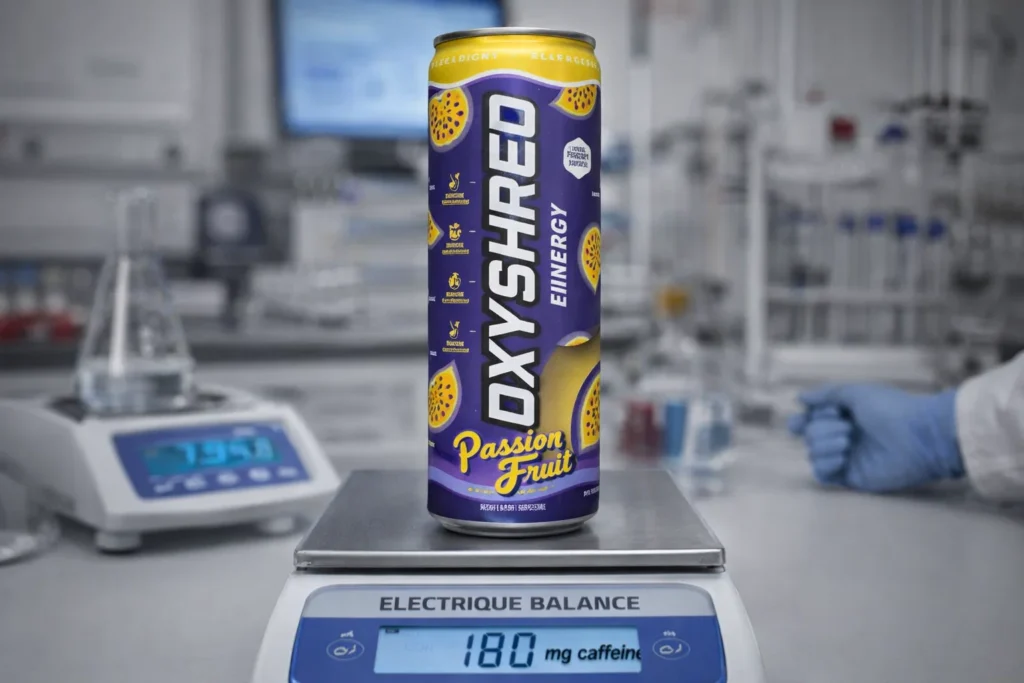
EHPlabs also explicitly says it “utilises…different sources of caffeine including caffeine anhydrous, guarana and green tea extract.”
Calories / sugar
The U.S. EHPlabs nutrition panel lists 0 calories and 0 sugar, and notes Cotton Candy contains 10 calories.
Some retailer listings show different calorie numbers for specific flavors (and retailers note label data can change), which is why checking your specific can matters.
Ingredients (what’s actually inside)
From the EHPlabs U.S. product page, the ingredient list includes (abridged for readability): carbonated water, L-carnitine tartrate, taurine, acids (citric/malic/fumaric/sodium citrate), sucralose, N-acetyl L-tyrosine, caffeine anhydrous, bitter orange extract, inositol, potassium sorbate, green tea extract, vitamin C, B vitamins, guarana seed extract, and chromium picolinate. 1
What those ingredients usually mean (plain-English breakdown)
1) The energy core: caffeine (plus guarana + green tea)
- You’re getting a straightforward stimulant effect from caffeine, with additional caffeine-containing botanicals listed (guarana/green tea) depending on the version.
- Translation: expect “real” energy especially if you get the 180 mg can.
2) “Pre-workout vibe” add-ons: taurine + tyrosine
- Taurine and tyrosine are common in energy drinks and pre-workouts because they fit the “performance/focus” theme (even when doses aren’t disclosed on RTD labels). 1
3) Metabolism/“shred” positioning: L-carnitine + bitter orange (in some versions)
- L-carnitine is included and heavily associated with fat-metabolism marketing across the supplement world.
- Some manufacturer ingredient lists include bitter orange extract (often associated with stimulant-style fat-loss products), which is a “proceed with caution” ingredient for some people.
4) Vitamins/minerals: vitamin C + B-complex + chromium
- The U.S. panel lists vitamin C and several B vitamins (plus chromium). This is common in energy drinks: it supports a “functional” positioning (even though vitamins don’t replace sleep).
5) Sweeteners/colors can differ by flavor/retailer
- Some retailer label listings include stevia and FD&C colors (example shown on a Target flavor listing), which may matter if you avoid certain dyes or prefer no stevia aftertaste.
How it feels: energy, focus, and “crash” potential
This part of an OxyShred energy drink review is mostly about caffeine dose + your tolerance:
- If you’re used to strong coffee or energy drinks, 180 mg will likely feel like a solid “get-stuff-done” or training boost.
- If you’re sensitive, it can feel like a lot, especially if stacked with coffee/pre-workout.
Caffeine safety basics (simple guidelines)
The FDA cites 400 mg/day as an amount “not generally associated with negative effects” for most healthy adultswhile also emphasizing big individual differences in sensitivity.
So a 180 mg can is not automatically “too much”, but it’s a meaningful chunk of a typical daily ceiling.
Practical tips:
- Don’t mix it with other stimulants “just because.”
- Avoid it late in the day if caffeine affects your sleep.
- If you’re new to energy drinks, consider starting with ½ can to gauge tolerance.
The “shred/fat loss” angle: what to believe (and what to ignore)
EHPlabs marketing frames OxyShred Energy/Ultra Energy as “more than just an energy drink” and talks about “shredding” style benefits.
Here’s the reality-check that keeps this review honest:
- The RTD label shows ingredients, but it generally doesn’t disclose clinical doses for many of the “functional” add-ons (except caffeine and the vitamin/mineral panel).
- In real life, fat loss still comes from sustained calorie deficit + training + sleep. An energy drink can support effort (motivation, alertness), but it’s not a shortcut.
Bitter orange caution (if your version contains it)
NCCIH notes serious concerns have been raised about bitter orange supplements, including reports of cardiovascular events (often multi-ingredient products), and evidence on cardiovascular effects is inconclusive (some studies show increased heart rate/blood pressure).
So if you have high blood pressure, arrhythmias, or you’re cautious with stimulants, treat that ingredient as a reason to be conservative and/or check with a clinician.
Flavors & taste: what to expect
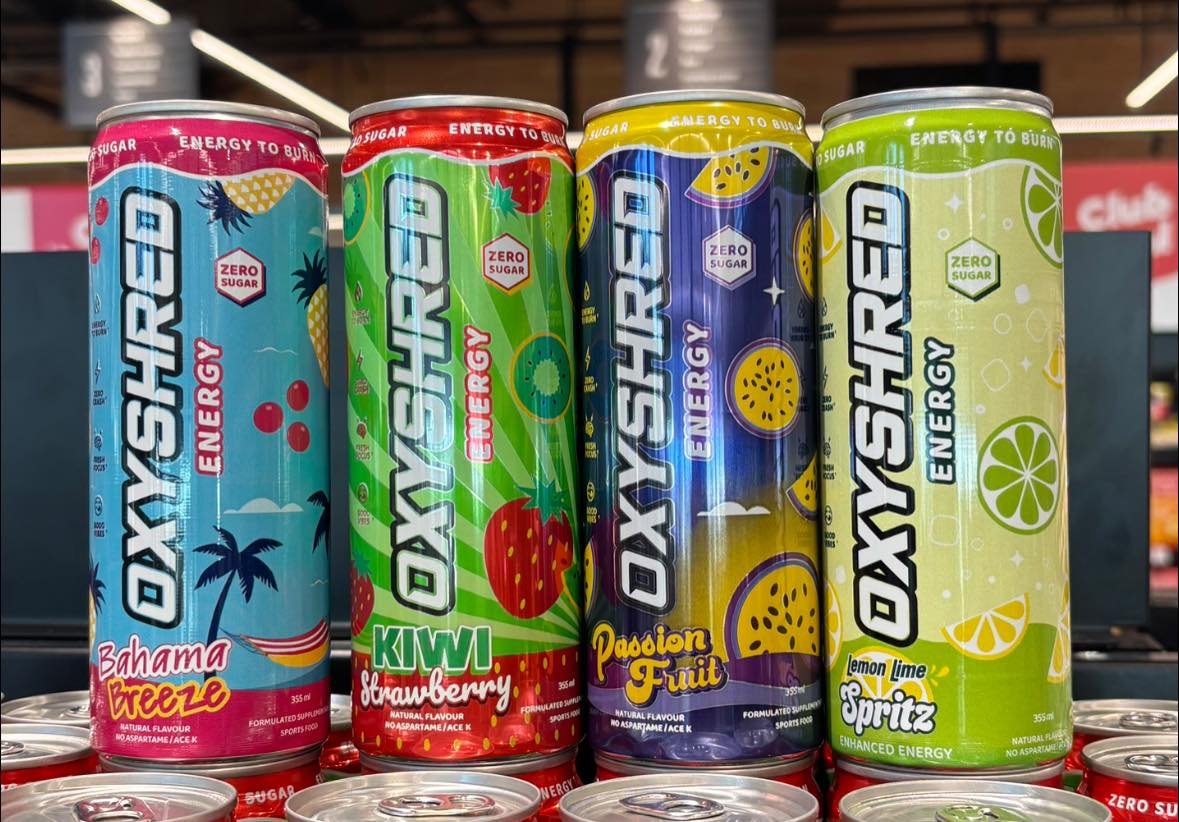
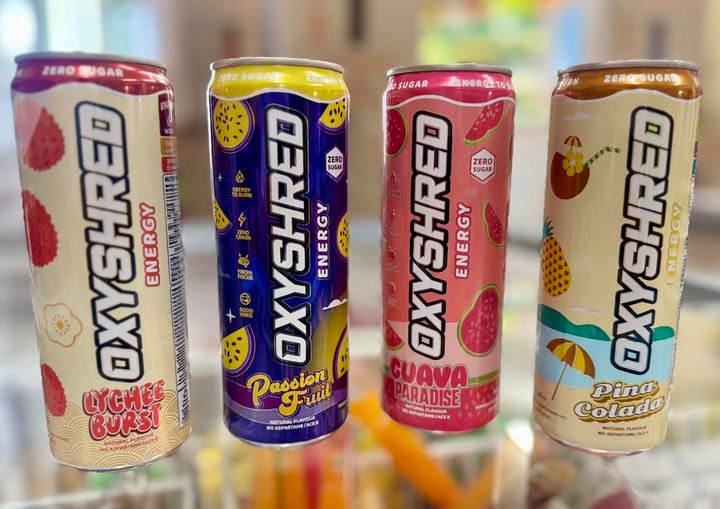
From the official EHPlabs product page, flavors can include options like Ghostbusters™ Proton Plasma, Ghostbusters™ Slimer, Kiwi Strawberry, Passionfruit, Pina Colada, Bahama Breeze, Guava Paradise, Peach Candy Rings, Cali Cola, Cotton Candy, and others depending on stock/region. 1
Taste expectation: “lightly carbonated,” sweetened (often sucralose; sometimes stevia is listed in retailer panels), and generally designed to taste like candy/fruit soda rather than “energy drink medicine.” 1
A couple of third-party reviewers list fan-favorite flavors like Passionfruit (and commonly list the “core” lineup such as Cotton Candy, Cali Cola, Gummy Snake, Kiwi Strawberry, Peach Candy Rings, Passionfruit, Guava Paradise, Pina Colada).
Price & value (quick math)
On the EHPlabs U.S. product page, a 12-pack is listed at $29.95 (pricing can change with promos/shipping). That’s roughly $2.50 per can before tax/shipping.
Value is strongest if:
- You actually like the flavors (so you’ll drink it consistently), and
- You’d otherwise buy a $2.50–$4.00 energy drink anyway.
Pros & cons (straightforward)
Pros
- Strong caffeine option in the U.S. version (180 mg) for people who want a noticeable boost.
- Zero sugar positioning, plus added vitamins/minerals on the label.
- Wide flavor variety depending on availability.
Cons
- Caffeine varies by market/variant (don’t assume the same kick every time).
- Some versions/ingredient lists include bitter orange extract, which may be a concern for stimulant-sensitive users.
- Retailer label panels can differ (sweeteners/colors/calories), so you may need to double-check the can.
Who should buy it (and who should skip it)
Best for:
- People who want a caffeinated, sugar-free drink that feels closer to a “pre-workout energy” profile than a basic soda-energy drink.
Skip or be cautious if:
- You’re sensitive to caffeine or trying to protect sleep quality (FDA notes wide variation in sensitivity).
- You have cardiovascular concerns and your version includes stimulant botanicals like bitter orange (talk to a clinician).
FAQ (SEO-friendly)
Is OxyShred Energy Drink good?
In this OxyShred energy drink review, it’s “good” if you want strong, sugar-free energy and like candy/fruit flavors but it’s not magic for fat loss, and caffeine tolerance matters.
How much caffeine is in OxyShred Energy?
Some U.S. listings show 180 mg per 12-oz can, while some other variants show 113 mg, so always verify your can/region.
Clarification: “caffeine types” in OxyShred Energy (what they are, and why it’s written that way)
On the U.S. EHPlabs page, the ingredients list includes caffeine anhydrous and also plant extracts that naturally contain caffeine (like guarana seed extract and green tea extract).
Here’s what those “types” mean:
1) Caffeine anhydrous (added, concentrated caffeine)
- Caffeine anhydrous is basically caffeine in a dehydrated (“without water”) form
- a purified, concentrated caffeine ingredient commonly used in supplements and energy products.
- Functionally, it’s a very direct way to deliver a known caffeine dose.
2) Caffeine from guarana seed extract (plant source that contains caffeine)
- Guarana (Paullinia cupana) naturally contains caffeine; the U.S. Pharmacopeia (USP) monograph specifies guarana seed contains not less than 3.5% caffeine on a dried basis.
- In an ingredient list, “guarana seed extract” means you may be getting caffeine plus other guarana compounds (flavonoids, tannins, other methylxanthines, etc.).
3) Caffeine from green tea extract (plant source that can contain caffeine)
- Green tea naturally contains both catechins (polyphenols) and caffeine; a typical brewed green tea (250 mL) is often cited around 30–40 mg caffeine, though it varies widely by preparation.
- Extracts can vary a lot depending on how they’re made (some are more caffeinated, some are partially/fully decaffeinated), but the key point is: green tea extract can contribute caffeine.
Does OxyShred Energy have sugar?
The official U.S. panel lists 0 sugars and 0 added sugars.
Final thoughts: my overall OxyShred energy drink review score
If your goal is a tasty, zero-sugar energy drink with a “functional” label (carnitine/taurine/tyrosine/vitamins), OxyShred Energy is a solid contender especially if you confirm you’re getting the caffeine level you want.
Just treat the “shred” framing as marketing unless your overall diet/training is aligned, and be conservative if you’re sensitive to stimulants (especially if your ingredient list includes bitter orange).

With a Bachelor’s in Biology and Health and a Master’s degree in Quality Control of Foods and Drugs, I review dietary supplements using scientific analysis, ingredient verification, and safety standards to provide transparent and reliable recommendations.