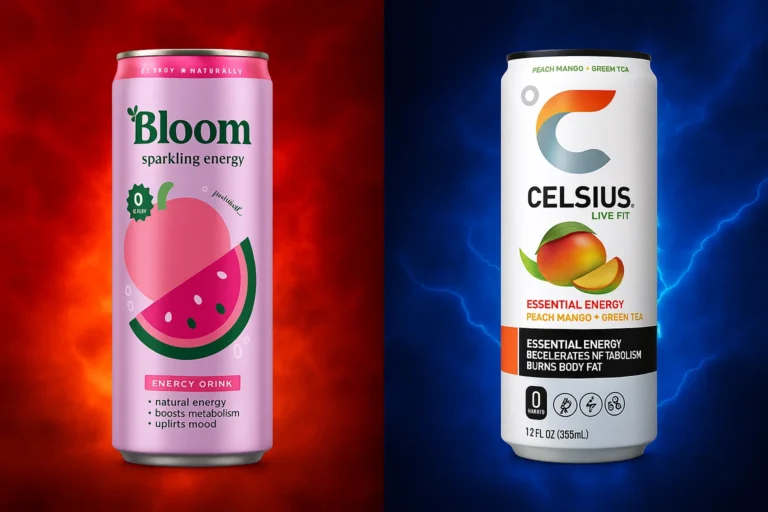
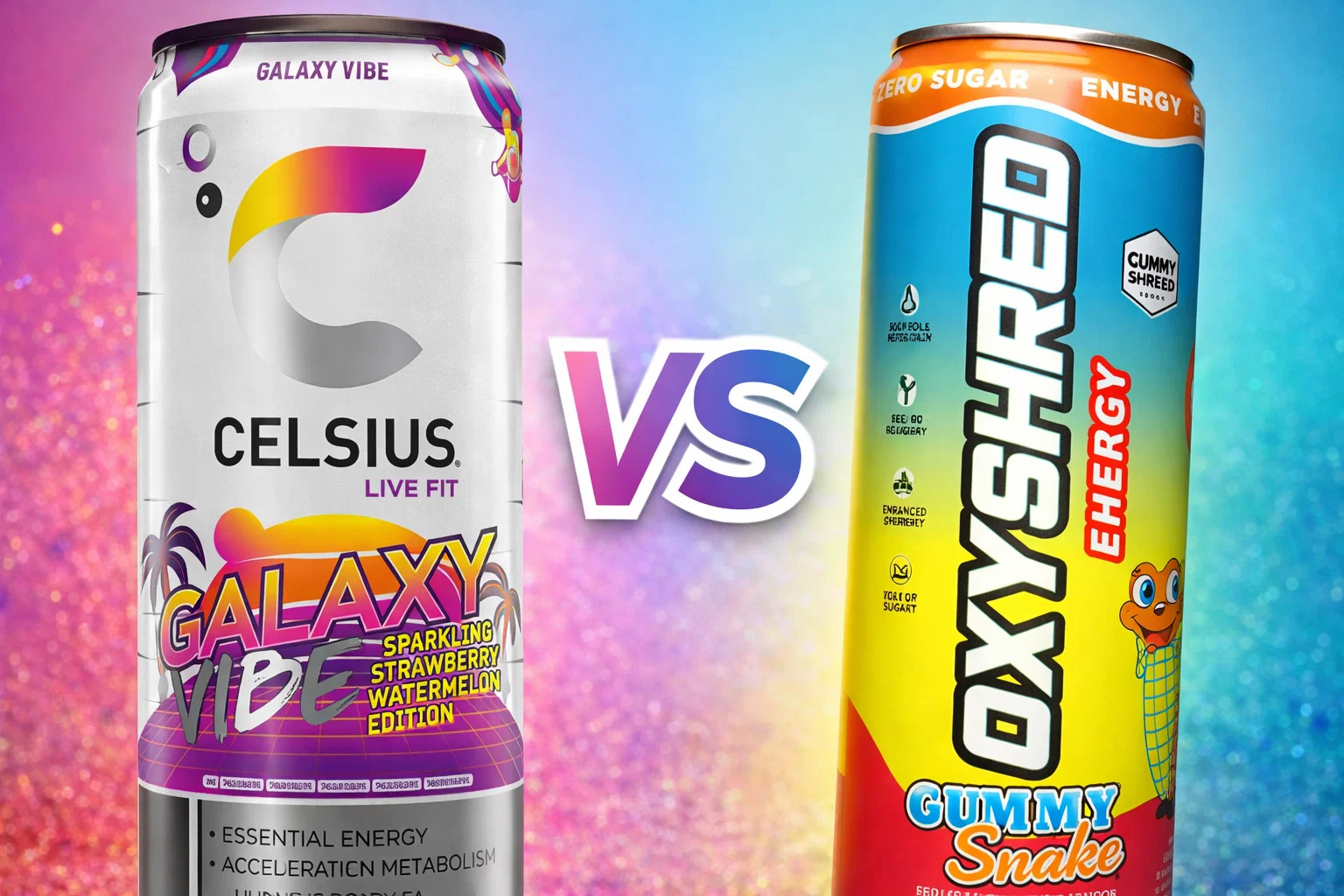
OxyShred vs Celsius Energy Drink: Ingredients, Caffeine, Fat Burning & Performance Compared
If you’re searching for OxyShred vs Celsius energy drink, you’re likely trying to decide which one is better for energy, workouts, and fat loss support.
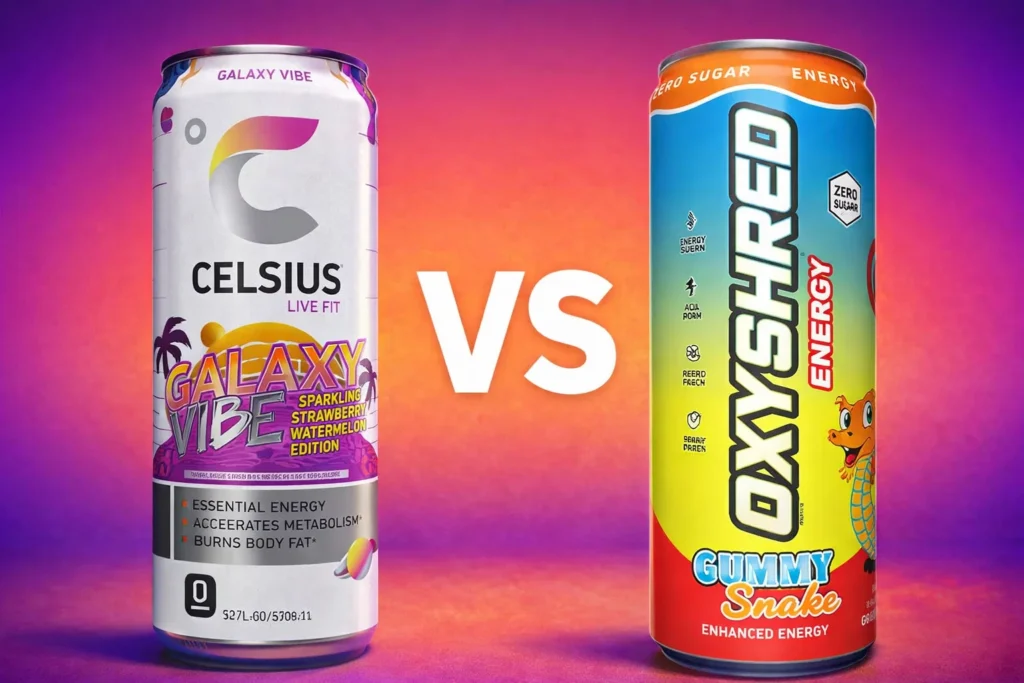
Both brands position themselves as fitness-focused, zero-sugar energy drinks designed to boost metabolism and performance. But while they look similar on the shelf, their ingredient philosophy, caffeine strength, and thermogenic approach are slightly different.
Table of Contents
Quick Comparison: OxyShred vs Celsius
| Feature | OxyShred Energy (U.S.) | Celsius Energy |
|---|---|---|
| Caffeine | 180 mg | 200 mg |
| Sugar | 0g | 0g |
| Calories | 0–10 (flavor dependent) | ~10 |
| Positioning | “Shred” / Pre-workout style | Thermogenic fitness drink |
| Amino Acids | Taurine, N-Acetyl L-Tyrosine | Taurine |
| Metabolic Add-ons | L-Carnitine, Bitter Orange (some versions), Chromium | Green Tea (EGCG), Ginger |
| Carbonation | Light | Fully carbonated |
OxyShred Energy Drink Ingredients
OxyShred Energy is designed to feel like a light pre-workout in a can. It combines multiple caffeine sources with amino acids and metabolism-support compounds.
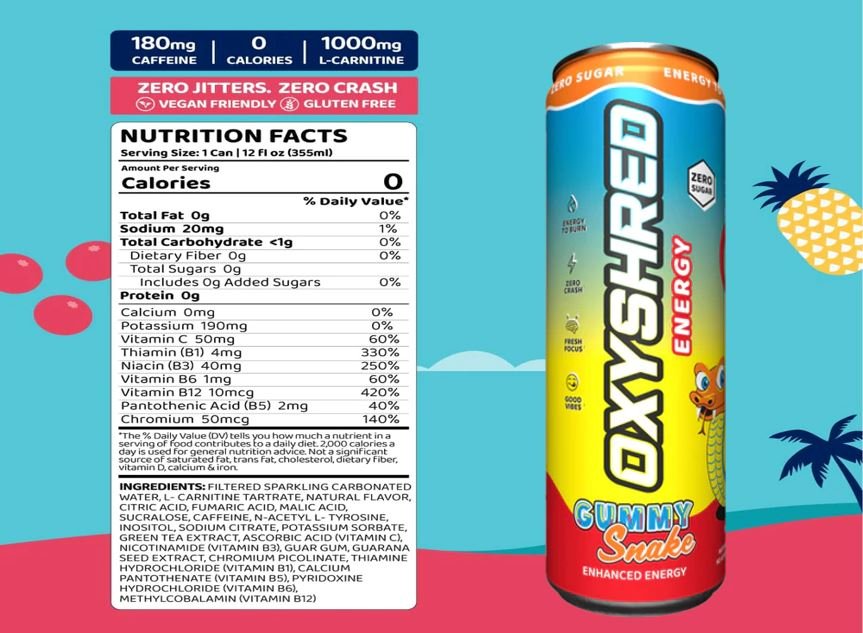
Caffeine Blend (Total 180 mg per U.S. can) — Combines caffeine anhydrous with caffeine from guarana and green tea extract. This provides moderate-to-strong stimulation, increased alertness, improved workout intensity, and enhanced calorie expenditure. At 180 mg, it delivers solid energy without reaching extreme pre-workout levels.
L-Carnitine Tartrate (Estimated 500 mg): Supports fatty acid transport into mitochondria for energy production and may assist recovery. Most fat-loss studies use 1–3 grams daily, so the RTD dose is likely supportive rather than clinically high.
Taurine (Estimated 500mg): Enhances cellular hydration, supports neurological stability, and helps smooth caffeine’s stimulating effects. Taurine may improve endurance performance and reduce jitteriness.
N-Acetyl L-Tyrosine (Estimated 200 mg): A precursor to dopamine and norepinephrine, helping support focus, stress resilience, and mental clarity during intense training or busy workdays.
Bitter Orange Extract (Standardized for Synephrine, Estimated 10–30 mg in some versions): Provides mild thermogenic stimulation and may increase metabolic rate. Individuals sensitive to stimulants should approach cautiously.
Chromium Picolinate (Estimated 50–200 mcg): Supports insulin signaling and blood sugar regulation. Plays a supportive metabolic role rather than directly driving fat loss.
Vitamin C + B Vitamins (B2, B3, B5, B6, B12): Support energy metabolism and help convert carbohydrates and fats into usable cellular energy.
Celsius Energy Drink Ingredients
Celsius is built for performance and thermogenesis. Its formula focuses heavily on caffeine synergy with plant extracts designed to enhance calorie burning and endurance.
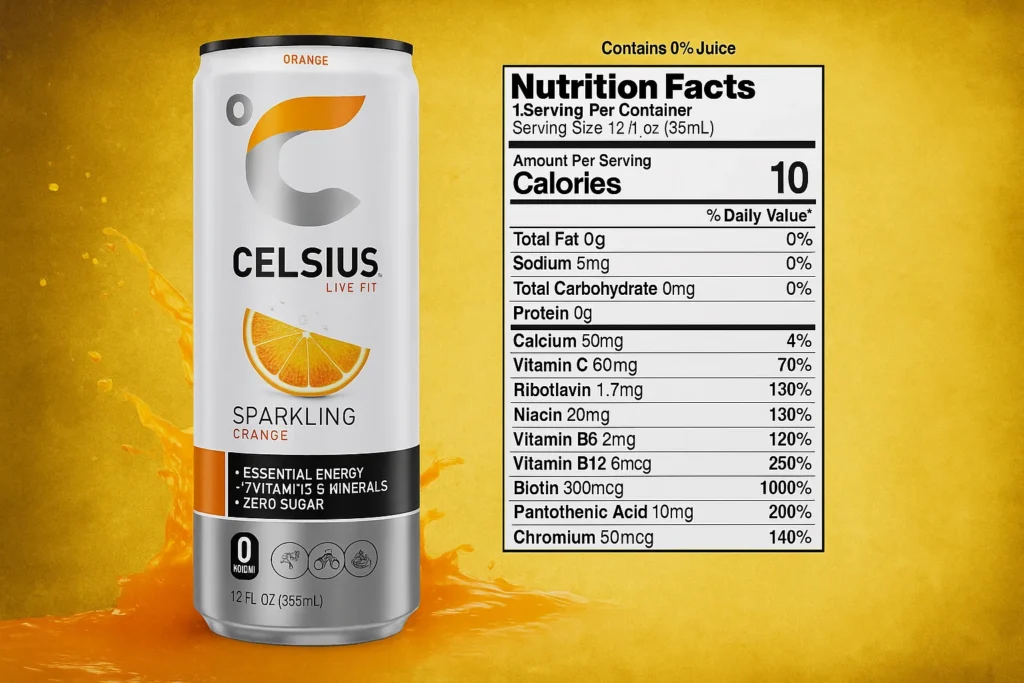
Green Tea Extract (with EGCG, Estimated 100–300 mg): Provides natural caffeine and catechins like EGCG that support thermogenesis, fat oxidation, and antioxidant activity. Green tea extract works synergistically with caffeine to enhance metabolic rate.
Guarana Seed Extract (Dose Varies): Supplies natural caffeine and additional plant compounds that may extend stimulation and reduce crash intensity.
Ginger Root Extract (Estimated 25–100 mg): Supports thermogenic activity, digestion, and mild anti-inflammatory effects. Research suggests small increases in metabolic rate and appetite control.
Caffeine (200 mg per can): Delivers a strong pre-workout boost. At 200 mg, Celsius provides slightly more stimulation than OxyShred’s U.S. version, making it more potent for high-intensity training.
Taurine (Estimated 500–1000 mg): Supports hydration, neurological balance, and performance while helping stabilize caffeine’s effects.
B Vitamins (B2, B3, B5, B6, B12): Enhance energy metabolism and improve nutrient-to-energy conversion efficiency.
Caffeine Comparison: Which Is Stronger?
- Celsius: 200 mg
- OxyShred (U.S.): 180 mg
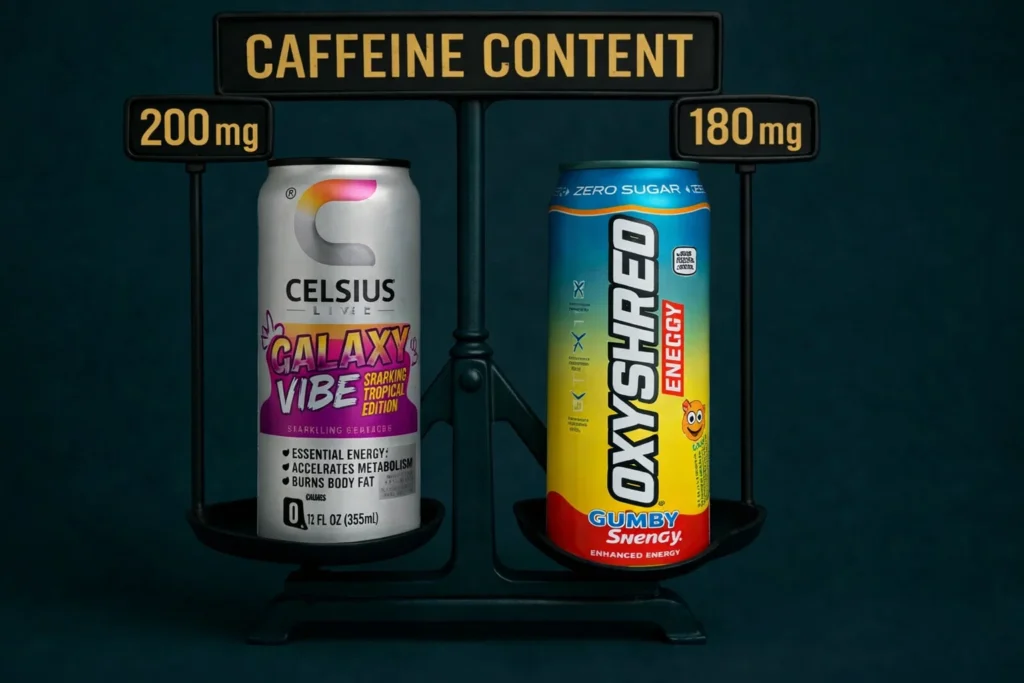
Celsius has a slight edge in caffeine strength.
For reference:
- 100 mg = strong cup of coffee
- 200 mg = high-stimulation range
- FDA suggests up to 400 mg per day is generally safe for healthy adults
Both drinks provide significant stimulation. Caffeine tolerance will determine how intense each feels.
Fat Burning: Marketing vs Reality
Both brands use thermogenic language like “shred,” “burn,” and “boost metabolism.”
Here’s what science supports:
• Caffeine increases metabolic rate by 3–11% temporarily
• Green tea extract + caffeine can modestly increase daily calorie expenditure
• L-carnitine effects are modest unless taken in higher doses long term
• Ginger and synephrine provide small thermogenic support
In practical terms:
Neither drink causes fat loss on its own.
Fat loss still requires:
- Calorie deficit
- Resistance training
- Protein intake
- Sleep consistency
Energy drinks can increase workout intensity which may indirectly support fat loss, but they are tools, not shortcuts.
Flavors & Taste: What to Expect from OxyShred and Celsius
When it comes to taste and flavor variety, both OxyShred and Celsius lean toward bold, fruit-forward profiles but they do have distinct personalities.
OxyShred Flavor Experience
OxyShred tends to offer playful, candy-style flavors that feel more like a flavored soda than a typical energy drink. Because the formula is lightly carbonated and uses sweeteners like sucralose (and sometimes stevia in certain retailer versions), the taste is often sweeter and smoother.
Common OxyShred flavors across markets include:
- Cotton Candy: Sweet and nostalgic, often cited as a crowd favorite
- Cali Cola: Cola-style sip with a fitness beverage twist
- Peach Candy Rings: Fruity and bright with a candy-like finish
- Passionfruit & Guava Paradise: Tropical, juicy profiles
- Pina Colada & Bahama Breeze: More exotic, vacation-style tastes
OxyShred’s flavor lineup is designed to appeal to people who enjoy sweet, dessert-like energy drinks that mask the supplement-style ingredients.
Celsius Flavor Experience
Celsius flavors have a more carbonated, crisp finish with a focus on fruit and citrus notes that come across less like soda and more like a sparkling fitness drink. Because Celsius uses natural extracts and carbonation, the taste tends to feel cleaner and brighter, which makes it easy to sip during workouts or throughout the day.
Popular Celsius flavors include:
- Peach Mango: Balanced sweetness with a refreshing finish
- Wild Berry / Berry Blast: Tart and punchy
- Grapefruit / Lemon Ginger: Crisp citrus boldness
- Watermelon / Cucumber Lime: Light, cooling hydration vibe
- Orange / Tropical Vibes: Classic fruity energy drink style
Celsius often markets its flavors as refreshing and invigorating, designed to feel like a fitness beverage first rather than a candy-style drink.
Flavor Summary
- OxyShred tastes more like a sweet, flavored soda with dessert-like options.
- Celsius is more sparkling, crisp, and refreshing, with fruit and citrus emphasis.
- Sweeteners vary between both brands (often sucralose, occasionally stevia), so taste perception can differ by flavor and retailer.
Flavor preference is personal, but if you like candy-sweet energy drinks, OxyShred may appeal more — while those who prefer a cleaner, fizzy, workout-style drink often lean toward Celsius.
Performance & Workout Impact
Celsius
- Stronger caffeine hit
- Clear thermogenic focus
- Popular as a pre-workout replacement
OxyShred
- Slightly lower caffeine
- Added tyrosine may support focus
- Carnitine adds a recovery-support angle
If you prioritize maximum stimulation → Celsius
If you prefer a pre-workout style ingredient profile → OxyShred
Crash Potential
Crash depends on:
- Total caffeine intake
- Hydration
- Sleep quality
- Individual sensitivity
Celsius’ 200 mg may feel stronger upfront.
OxyShred’s blended caffeine sources may feel slightly smoother to some users.
Neither contains sugar, so crashes are more caffeine-related than blood sugar-related.
Safety Considerations
Both drinks:
- Contain artificial sweeteners
- Deliver moderate-to-high caffeine
- Include stimulant compounds
Be cautious if you:
- Have high blood pressure
- Are sensitive to caffeine
- Stack with pre-workout supplements
- Consume multiple energy drinks daily
If your OxyShred version includes bitter orange, stimulant-sensitive individuals should consult a healthcare professional.
Final Verdict: OxyShred vs Celsius Energy Drink
Choose Celsius if:
- You want stronger caffeine (200 mg)
- You prefer green tea–based thermogenesis
- You want a gym-recognized pre-workout alternative
Choose OxyShred if:
- You prefer slightly lower caffeine (180 mg U.S.)
- You like tyrosine + carnitine inclusion
- You want a supplement-style ingredient profile
Neither drink replaces proper nutrition and training.
The real difference in the OxyShred vs Celsius energy drink debate comes down to:
- Caffeine tolerance
- Ingredient preference
- Stimulant sensitivity
- Flavor preference
If energy and performance are your goal, both deliver.
If fat loss is your goal, your diet matters far more than what’s in the can.
Scientific References Overview
Here are summaries of key research findings supporting major ingredients:
Caffeine: Proven to enhance endurance, strength, alertness, and thermogenesis. (Spriet, 2014; Grgic et al., 2019)
Green Tea Extract (EGCG): Shown to modestly increase fat oxidation and daily calorie expenditure when combined with caffeine. (Hursel et al., 2011)
L-Carnitine: Some evidence supports improved recovery and small reductions in fat mass at doses ≥2 g/day. (Pooyandjoo et al., 2016)
Synephrine (Bitter Orange): Mild metabolic increases observed; cardiovascular safety remains debated. (Stohs et al., 2012)
Taurine: May improve endurance performance and reduce muscle fatigue markers. (Waldron et al., 2018)
Ginger: Shows small thermogenic and appetite-regulating effects. (Mansour et al., 2012)
Overall, caffeine remains the primary driver of measurable energy and metabolic effects in both drinks.

With a Bachelor’s in Biology and Health and a Master’s degree in Quality Control of Foods and Drugs, I review dietary supplements using scientific analysis, ingredient verification, and safety standards to provide transparent and reliable recommendations.