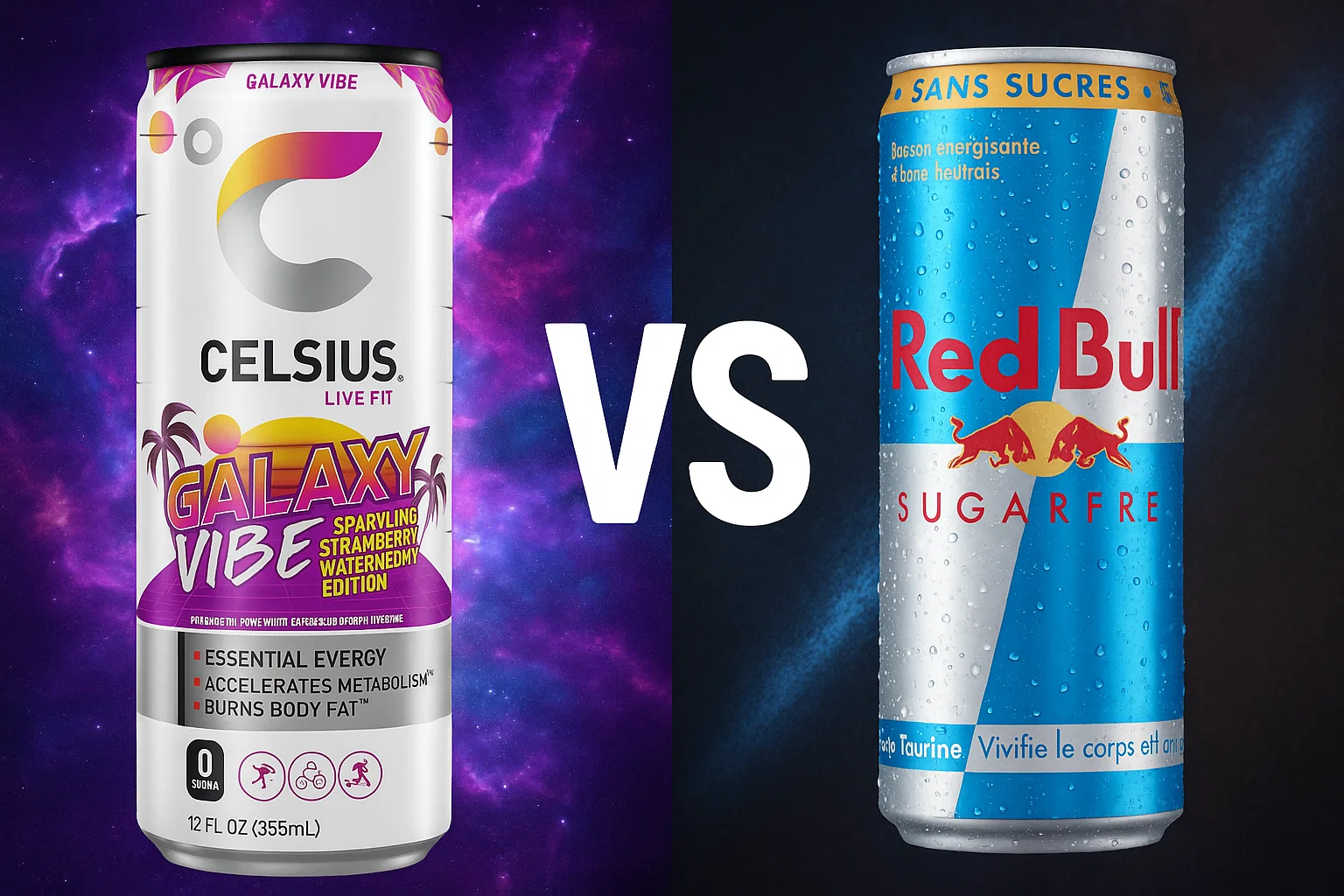
Sugar Free Red Bull vs Celsius: Which Energy Drink Is Better?
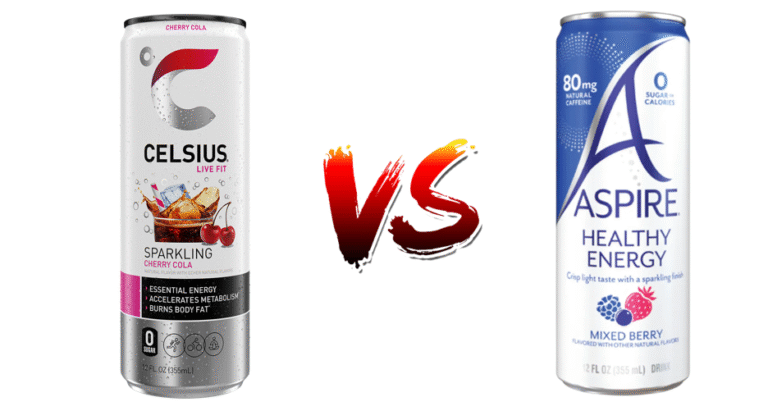
Energy drinks have become a daily go-to for fitness enthusiasts, busy professionals, and students. Two of the most popular options are Celsius and Red Bull Sugar Free. Both promise energy without added sugar, but they’re quite different in ingredients, caffeine levels, flavors, and overall benefits.
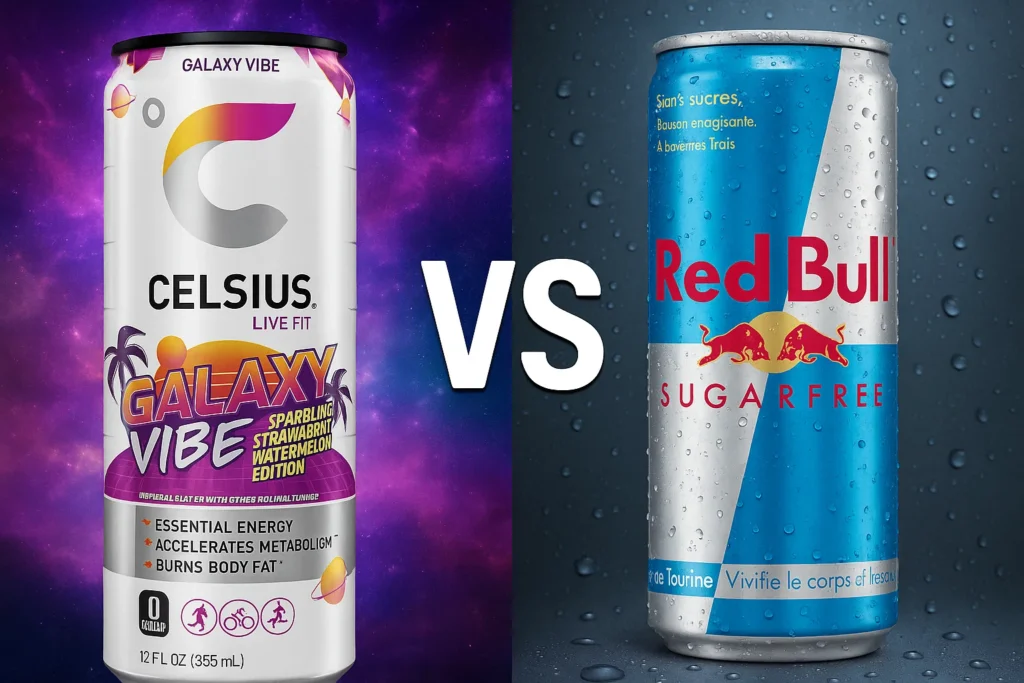
If you’re wondering Sugar Free Red Bull vs Celsius and which one should you choose?, this guide breaks it all down for you.
Table of Contents
Sugar Free Red Bull vs Celsius Ingredients Breakdown
Both Sugar Free Red Bull and Celsius take very different approaches with their formulas. Red Bull Sugar Free keeps things simple and classic, focusing on caffeine, taurine, and B-vitamins for a quick energy boost without sugar. On the other hand, Celsius leans into a more fitness-oriented formula, combining natural caffeine with green tea extract, guarana, ginger, and vitamins for performance and metabolism support.
Let’s break down the ingredients in each drink to see how they compare:
Sugar Free Red Bull Ingredients
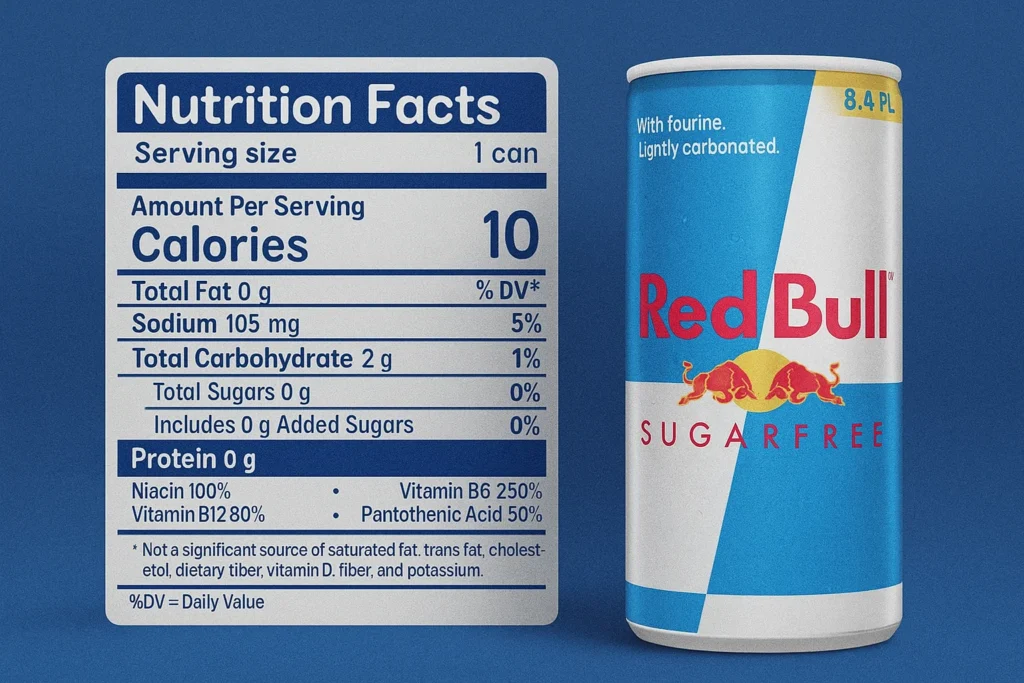
- Caffeine (80 mg per can) – Boosts energy and focus.
- Safe intake: Up to 400 mg/day.
- Side effects (excess): Jitters, anxiety, insomnia, high heart rate.
- Taurine (~1,000 mg per can) – Supports endurance and reduces fatigue.
- Safe intake: Up to 3,000 mg/day.
- Side effects (rare): Kidney strain at very high doses.
- Niacinamide (Vitamin B3, ~22 mg) – Supports energy metabolism.
- RDI: 14–16 mg/day.
- Upper limit: 35 mg/day.
- Side effects (excess): Flushing, nausea, liver stress.
- Calcium Pantothenate (Vitamin B5, ~3.5 mg) – Supports energy production.
- RDI: 5 mg/day.
- Side effects (excess): Mild diarrhea at very high doses.
- Pyridoxine HCl (Vitamin B6, ~6 mg) – Helps amino acid metabolism.
- RDI: 1.3–1.7 mg/day.
- Upper limit: 100 mg/day.
- Side effects (excess): Nerve damage, numbness.
- Vitamin B12 (~3 mcg) – Supports red blood cell production and reduces fatigue.
- RDI: 2.4 mcg/day.
- Side effects: Generally safe, no known toxicity.
- Magnesium Carbonate – Supports muscle function and electrolyte balance.
- RDI: 310–420 mg/day.
- Upper limit (from supplements): 350 mg/day.
- Side effects (excess): Diarrhea, cramping.
🧪 Other Ingredients
- Carbonated Water – Base of the drink.
- Safe intake: Safe.
- Side effects: None.
- Citric Acid – Adds tartness and acts as a preservative.
- Safe intake: Generally safe.
- Side effects (excess): Tooth enamel erosion, stomach upset.
- Sodium Bicarbonate – Regulates acidity.
- Safe intake: Up to ~5 g/day.
- Side effects (excess): Bloating, high sodium levels.
- Acesulfame K – Zero-calorie sweetener.
- Safe intake: 15 mg/kg body weight/day.
- Side effects (excess): May cause digestive discomfort in sensitive people.
- Aspartame – Zero-calorie sweetener.
- Safe intake: 40 mg/kg body weight/day.
- Side effects: Not safe for people with PKU, may cause headaches in some individuals.
- Xanthan Gum – Thickener/stabilizer.
- Safe intake: Up to ~15 g/day.
- Side effects (excess): Bloating, laxative effect.
- Natural and Artificial Flavors – Taste profile.
- Safe intake: Generally safe (GRAS).
- Side effects: May trigger sensitivity, headaches, or allergies in some people.
- Colors – For appearance.
- Safe intake: Generally safe.
- Side effects: Some artificial colors may cause hyperactivity or allergic reactions.
Celsius Energy Drink Ingredients
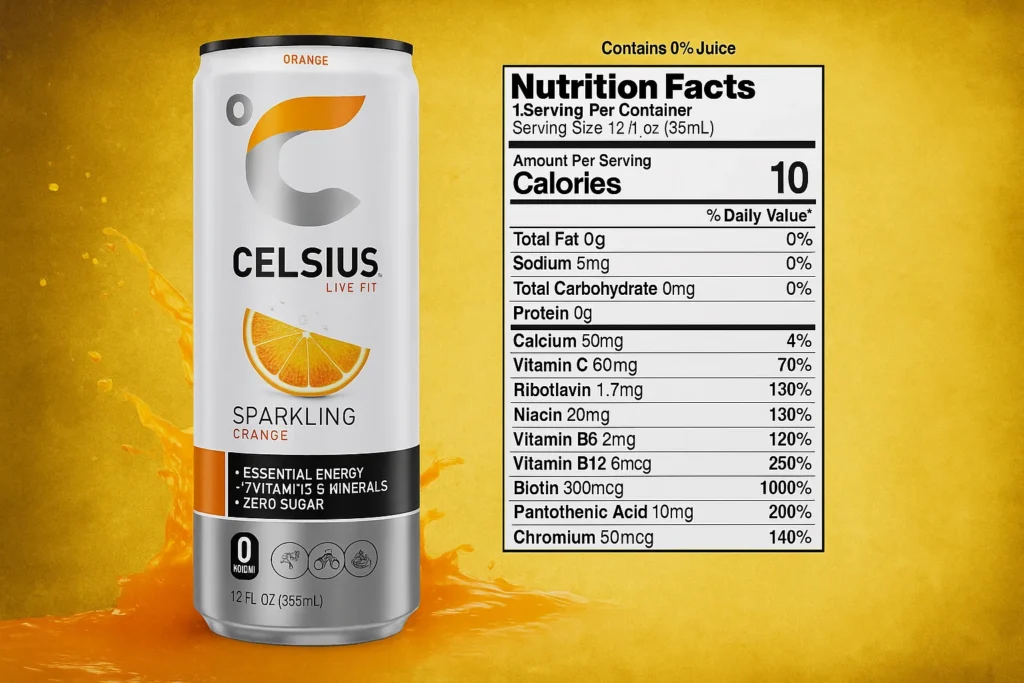
- Caffeine (200 mg per can) – Provides strong energy and focus.
- Safe intake: Up to 400 mg/day.
- Side effects (excess): Jitters, insomnia, anxiety, rapid heartbeat.
- Taurine (~1,000 mg per can) – Supports endurance and reduces fatigue.
- Safe intake: Up to 3,000 mg/day.
- Side effects (rare, very high doses): Kidney strain.
- Guarana Seed Extract – Adds extra natural caffeine for endurance and alertness.
- Safe intake: Depends on total caffeine (200–400 mg/day recommended).
- Side effects (excess): Same as caffeine – jitters, sleep issues, palpitations.
- Green Tea Extract – Supports metabolism and fat-burning.
- Safe intake: 250–500 mg/day.
- Side effects (excess): Stomach upset, possible liver stress at very high supplemental doses.
- Glucuronolactone – Claimed to support detox and focus (common in energy drinks).
- Safe intake: Up to 1,200 mg/day considered safe.
- Side effects (rare, high doses): Headache, restlessness.
- Vitamin C (Ascorbic Acid, 60 mg / 70% DV) – Boosts immunity and recovery.
- RDI: 75–90 mg/day.
- Upper limit: 2,000 mg/day.
- Side effects (excess): Stomach upset, kidney stones (at very high doses).
- Riboflavin (Vitamin B2, 1.7 mg / 130% DV) – Helps convert food into energy.
- RDI: 1.1–1.3 mg/day.
- Side effects: Generally safe, excess may turn urine bright yellow.
- Niacinamide (Vitamin B3, 20 mg / 130% DV) – Supports energy metabolism.
- RDI: 14–16 mg/day.
- Upper limit: 35 mg/day.
- Side effects (excess): Flushing, nausea, liver stress.
- Vitamin B6 (Pyridoxine HCl, 2 mg / 120% DV) – Helps amino acid metabolism.
- RDI: 1.3–1.7 mg/day.
- Upper limit: 100 mg/day.
- Side effects (excess): Numbness, nerve damage (very high doses long-term).
- Vitamin B12 (Cyanocobalamin, 6 mcg / 250% DV) – Supports red blood cells and energy.
- RDI: 2.4 mcg/day.
- Side effects: Safe even at high intakes, no known toxicity.
- Biotin (300 mcg / 1000% DV) – Supports metabolism, hair, and nails.
- RDI: 30 mcg/day.
- Side effects: Generally safe, but excessive doses can interfere with lab tests.
- Pantothenic Acid (Vitamin B5, 10 mg / 200% DV) – Supports energy production.
- RDI: 5 mg/day.
- Side effects (excess): Mild diarrhea at very high doses.
- Chromium (50 mcg / 140% DV) – Helps regulate blood sugar.
- RDI: 25–35 mcg/day.
- Side effects (excess >1,000 mcg/day): Stomach irritation, kidney/liver issues.
- Calcium (50 mg / 4% DV) – Supports bone health and muscle function.
- RDI: 1,000 mg/day.
- Side effects (excess >2,000 mg/day): Kidney stones, constipation.
🧪 Other Ingredients
- Carbonated Filtered Water – Base of the drink.
- Safe intake: Safe.
- Side effects: None.
- Citric Acid – Adds tartness and preserves freshness.
- Safe intake: Generally safe.
- Side effects (excess): Tooth enamel erosion, stomach irritation.
- Calcium Carbonate – Source of calcium and stabilizer.
- Safe intake: Safe within calcium RDI.
- Side effects (excess): Constipation, bloating.
- Sucralose (Sweetener) – Zero-calorie sugar substitute.
- Safe intake: 5 mg/kg body weight/day.
- Side effects (excess): Digestive upset in sensitive individuals.
- Beta-Carotene (Color) – Natural colorant and source of Vitamin A.
- Safe intake: Generally safe.
- Side effects (excess supplements): May cause skin to turn orange (harmless).
- Natural Flavors – Provide taste profile.
- Safe intake: Generally safe (GRAS).
- Side effects: Possible sensitivity in some people.
Key Differences Between Red Bull Sugar Free and Celsius
While both Sugar Free Red Bull and Celsius are sugar-free, low-calorie energy drinks, they take very different approaches. Red Bull Sugar Free keeps things simple and classic, with caffeine, taurine, and B vitamins for quick energy. Celsius, on the other hand, is fitness-focused, packing more caffeine from natural sources plus metabolism-boosting ingredients like green tea, guarana, and ginger.
| Feature | Sugar Free Red Bull | Celsius |
|---|---|---|
| Caffeine | 80 mg | 200 mg |
| Sweeteners | Aspartame & Acesulfame K | Sucralose or Stevia |
| Functional Ingredients | Taurine, B-Vitamins | Green Tea Extract, Guarana, Ginger, Vitamin C, Chromium, B-Vitamins |
| Calories | ~10 | ~10 |
| Target Audience | Quick energy boost, classic taste | Fitness & wellness focused, performance energy |
Caffeine Content Comparison
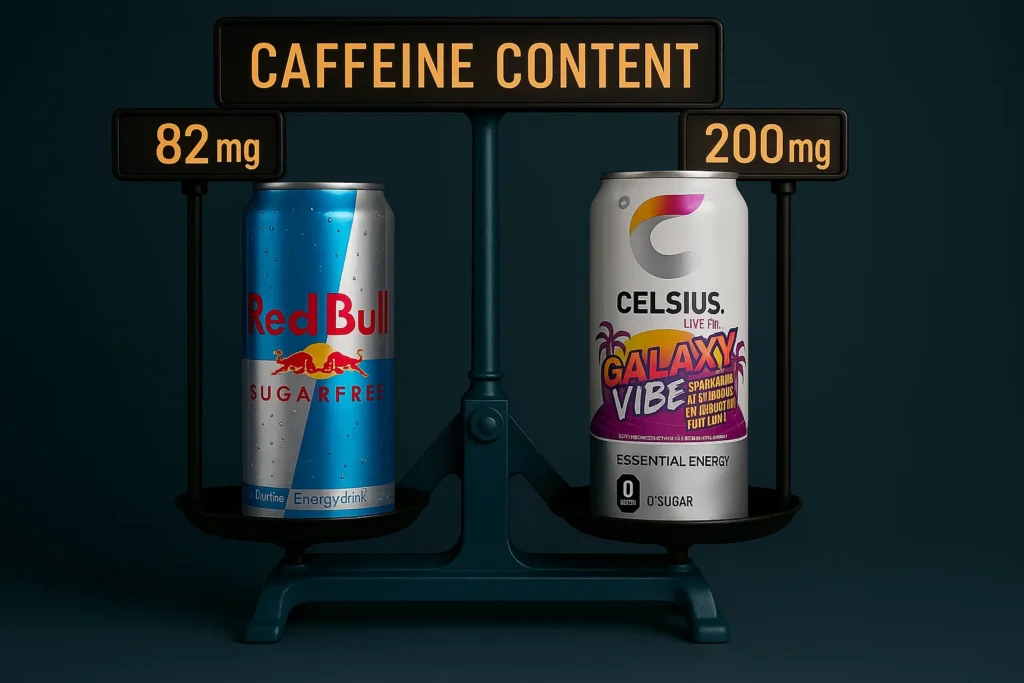
- Sugar Free Red Bull: 82 mg per 8.4 fl oz can – a lighter, more moderate boost that’s less likely to overstimulate.
- Celsius: 200 mg per 12 fl oz can – a stronger hit of energy, ideal for workouts and endurance.
👉 If you want smooth, steady energy without jitters, Sugar Free Red Bull is the safer pick.
👉 If you want a powerful, workout-ready boost, Celsius is the better option.
Calories & Sugar Content Comparison
- Sugar Free Red Bull: ~10 calories, 0 g sugar. Sweetened with Aspartame & Acesulfame K.
- Celsius: ~10 calories, 0 g sugar. Sweetened with Sucralose or Stevia (depending on flavor).
👉 Both are sugar-free and diet-friendly — the main difference lies in the type of sweeteners used.
Electrolyte & Nutrient Support
- Sugar Free Red Bull: Contains Magnesium Carbonate & Sodium Bicarbonate, which help balance electrolytes and support hydration.
- Celsius: No added electrolytes, but includes Chromium, which may help regulate blood sugar levels.
Flavors & Taste: Sugar Free Red Bull vs Celsius
When it comes to flavors, each brand offers a different experience:
Red Bull Sugar Free Flavors
- Classic Sugar Free (light, crisp, slightly citrus taste)
- Summer & Limited Editions (e.g., Coconut Berry, Tropical, Watermelon)
Celsius Flavors
- Sparkling Orange
- Sparkling Watermelon
- Peach Vibe
- Arctic Vibe
- Tropical Vibe
- Seasonal & limited editions
👉Red Bull Sugar Free is limited but consistent in taste, while Celsius shines with a wider variety of fruity, refreshing flavors.
Which One Should You Choose?
- Choose Sugar Free Red Bull if you want a lighter caffeine dose, enjoy the classic Red Bull taste, and just need a quick pick-me-up.
- Choose Celsius if you’re looking for performance-focused energy, a bigger caffeine boost, and more functional ingredients for workouts or active days.
Brand Overview
- Red Bull: The original pioneer of energy drinks, globally recognized and tied to extreme sports and nightlife. Sugar Free Red Bull is the calorie-conscious version of its flagship drink.
- Celsius: A newer, fitness-oriented brand, marketed as a healthy energy drink with metabolism support, natural caffeine, and workout-focused benefits.
Final Thoughts
When comparing Sugar Free Red Bull vs Celsius, the best choice comes down to your energy needs and lifestyle:
- Red Bull Sugar Free = Classic, crisp taste, lighter caffeine, quick everyday energy.
- Celsius = Fitness-driven, higher caffeine, clean energy, and diverse flavors for workouts.
👉 Both are sugar-free, low-calorie, and effective energy boosters, the difference is how much caffeine you want and whether you prefer a classic or fitness-focused experience.

With a Bachelor’s in Biology and Health and a Master’s degree in Quality Control of Foods and Drugs, I review dietary supplements using scientific analysis, ingredient verification, and safety standards to provide transparent and reliable recommendations.