
Citric Acid in Supplements: Benefits, Safety, and What You Should Know
Citric acid is a naturally occurring organic acid found primarily in citrus fruits such as lemons, limes, and oranges. In dietary supplements, citric acid is widely used as a flavor enhancer, preservative, and pH regulator. Due to its versatility and safety profile, it is one of the most common additives in powdered, liquid, and effervescent supplements.

You will frequently find citric acid in pre-workouts, electrolyte formulas, hydration blends, vitamin drinks, and mineral supplements.
Chemical & Functional Overview
Citric acid (C₆H₈O₇) plays a natural role in human metabolism as part of the citric acid (Krebs) cycle, which is essential for energy production.
Key functional properties:
- Water-soluble
- Naturally acidic
- Chemically stable
- Acts as a chelating agent
Primary roles in supplements:
👉 Flavor enhancer
👉 Preservative
👉 pH regulator
Why Citric Acid in Supplements
Citric acid is highly valued in supplement formulation because it serves multiple purposes at once:
- Enhances taste by adding a refreshing sour note
- Masks bitterness from amino acids, minerals, and vitamins
- Stabilizes formulas by controlling acidity (pH)
- Extends shelf life by slowing microbial growth
- Improves solubility of active ingredients
Its multifunctional nature makes citric acid cost-effective and formulation-friendly.
Common Supplement Types That Contain It
Citric acid is commonly found in:
- Pre-workout powders
- Electrolyte and hydration blends
- Effervescent tablets
- Vitamin C and multivitamin drinks
- Mineral supplements (citrate forms)
- Liquid supplements and syrups
It is especially important in flavored and drinkable supplements.
Benefits for Consumers
Although citric acid is not added for direct nutritional value, it provides several important functional benefits that enhance supplement quality.
Key consumer benefits include:
- Improved taste and palatability: Citric acid creates a clean, refreshing flavor that makes supplements easier and more enjoyable to consume.
- Better mixability and solubility: Helps powders dissolve evenly in water, reducing residue and sediment.
- Enhanced product freshness: Slows oxidation and degradation, keeping supplements tasting fresh for longer.
- Supports mineral absorption: Citrate forms of minerals (e.g., magnesium citrate) are often better absorbed than other forms.
These benefits contribute to a better user experience and more reliable supplement performance.
Safety Profile & Regulatory Status
Citric acid is considered very safe for human consumption and has been used in foods and beverages for decades.
Regulatory status:
- ✅ Approved by the FDA (USA)
- ✅ Approved by the EFSA (Europe)
- ✅ Classified as GRAS (Generally Recognized As Safe)
Citric acid does not have an established Acceptable Daily Intake (ADI) because the body naturally metabolizes it, and toxicity at normal dietary levels is extremely low.
Potential Side Effects & Controversies
At typical supplement doses, citric acid is well tolerated by most individuals.
Possible concerns include:
- Mild stomach irritation in sensitive individuals at high intakes
- Acidic beverages may contribute to dental enamel erosion if consumed frequently without proper oral care
Important clarification:
Citric acid does not acidify the blood or disrupt the body’s pH balance when consumed in normal amounts. Concerns are usually related to excessive intake, not standard supplement use.
Natural vs Synthetic Citric Acid
Citric acid can be sourced in two main ways:
- Natural: Extracted from citrus fruits
- Synthetic (fermentation-derived): Produced using fermentation of sugars (most common method)
Both forms are chemically identical, safe, and effective. Fermentation-derived citric acid is widely used due to its purity and consistency.
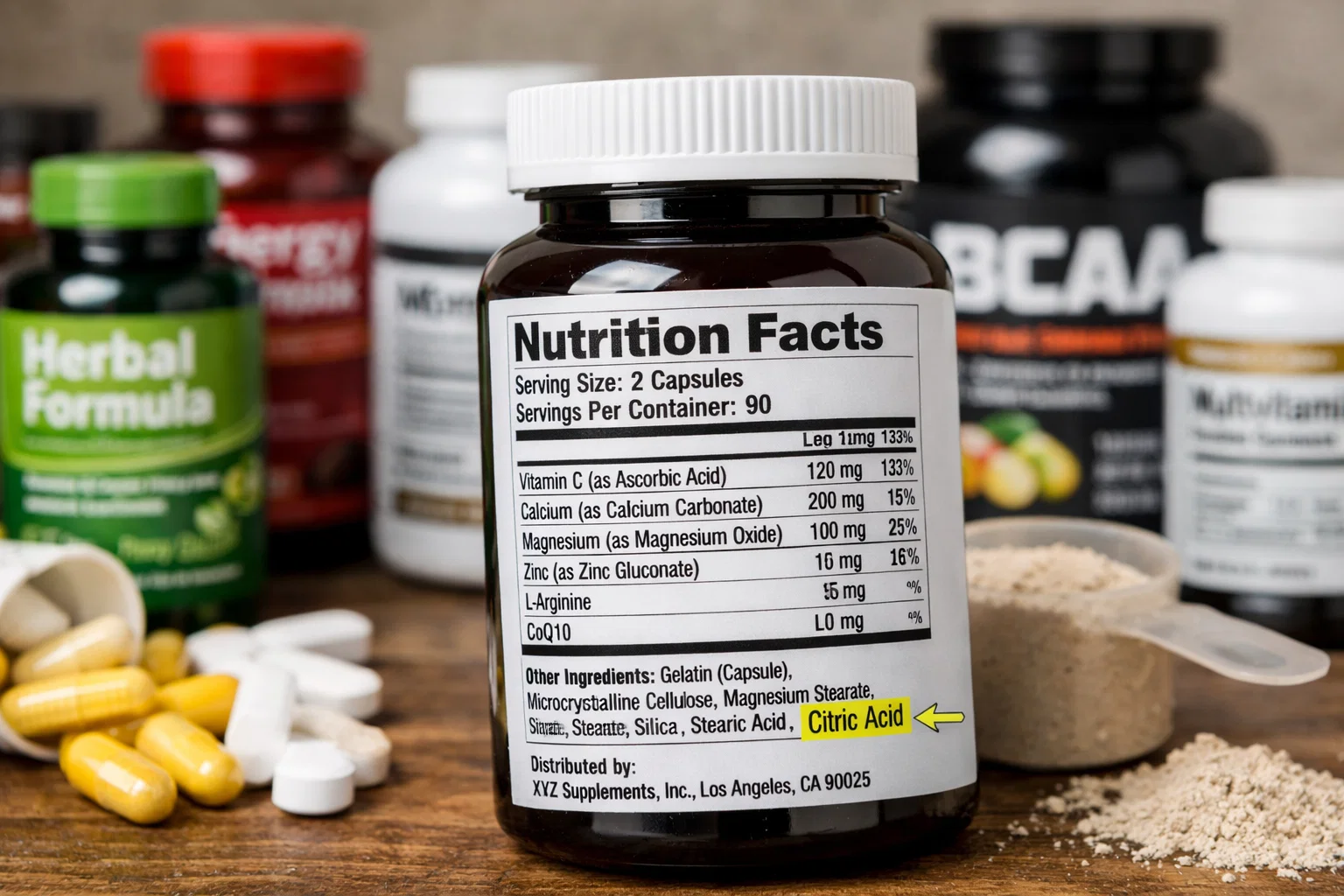
How to Identify It on Supplement Labels
Citric acid may appear under the following names:
- Citric Acid
- E330 (EU food additive code)
It is usually listed among flavoring agents or stabilizers on the ingredient label.
Clean Label Perspective
Citric acid is widely accepted in clean-label and natural supplement formulas.
Why clean brands use it:
- Naturally occurring compound
- Well-studied safety profile
- Multifunctional and effective
Common alternatives:
- Malic acid
- Tartaric acid
Citric acid remains one of the most trusted acids in supplement formulation.
Expert Opinion & Final Verdict
Expert assessment:
Citric acid is a safe, effective, and essential additive in modern supplements. It improves taste, stability, and usability without posing health risks when used appropriately.
Overall score: ⭐⭐⭐⭐⭐ (5/5)
✔ Highly safe
✔ Improves flavor & stability
✔ Widely accepted
FAQ – Frequently Asked Questions
Is citric acid bad for health?
No. It is safe at normal dietary and supplement levels.
Is citric acid natural?
Yes, it occurs naturally, though most supplement-grade citric acid is fermentation-derived.
Is it vegan?
Yes, citric acid is vegan-friendly.
Can citric acid cause bloating?
Rarely, and usually only at high doses.
Conclusion: Should You Be Concerned?
Citric acid is one of the most commonly used and safest additives in dietary supplements. Its ability to enhance flavor, preserve freshness, and regulate pH makes it essential for high-quality formulations. For most consumers, citric acid is not a concern and plays a positive role in supplement effectiveness and enjoyment.
Scientific References
- FDA (U.S. Food and Drug Administration)
Citric acid is classified as GRAS (Generally Recognized As Safe) for use in foods and dietary supplements.
https://www.fda.gov/food/food-ingredients-packaging/food-additive-status-list - EFSA (European Food Safety Authority)
EFSA confirms that citric acid (E330) does not raise safety concerns at current use levels.
https://www.efsa.europa.eu/en/efsajournal/pub/6032 - FAO / WHO – JECFA
Citric acid has an ADI “not specified”, indicating low toxicological risk at normal intake levels.
https://apps.who.int/food-additives-contaminants-jecfa-database - PubMed (Scientific Literature)
Studies show citric acid is naturally metabolized and safe at dietary exposure levels.
https://pubmed.ncbi.nlm.nih.gov

With a Bachelor’s in Biology and Health and a Master’s degree in Quality Control of Foods and Drugs, I review dietary supplements using scientific analysis, ingredient verification, and safety standards to provide transparent and reliable recommendations.

3 Comments
Comments are closed.