Pocari Sweat vs Aquarius: Which Hydration Drink Is Right for You?
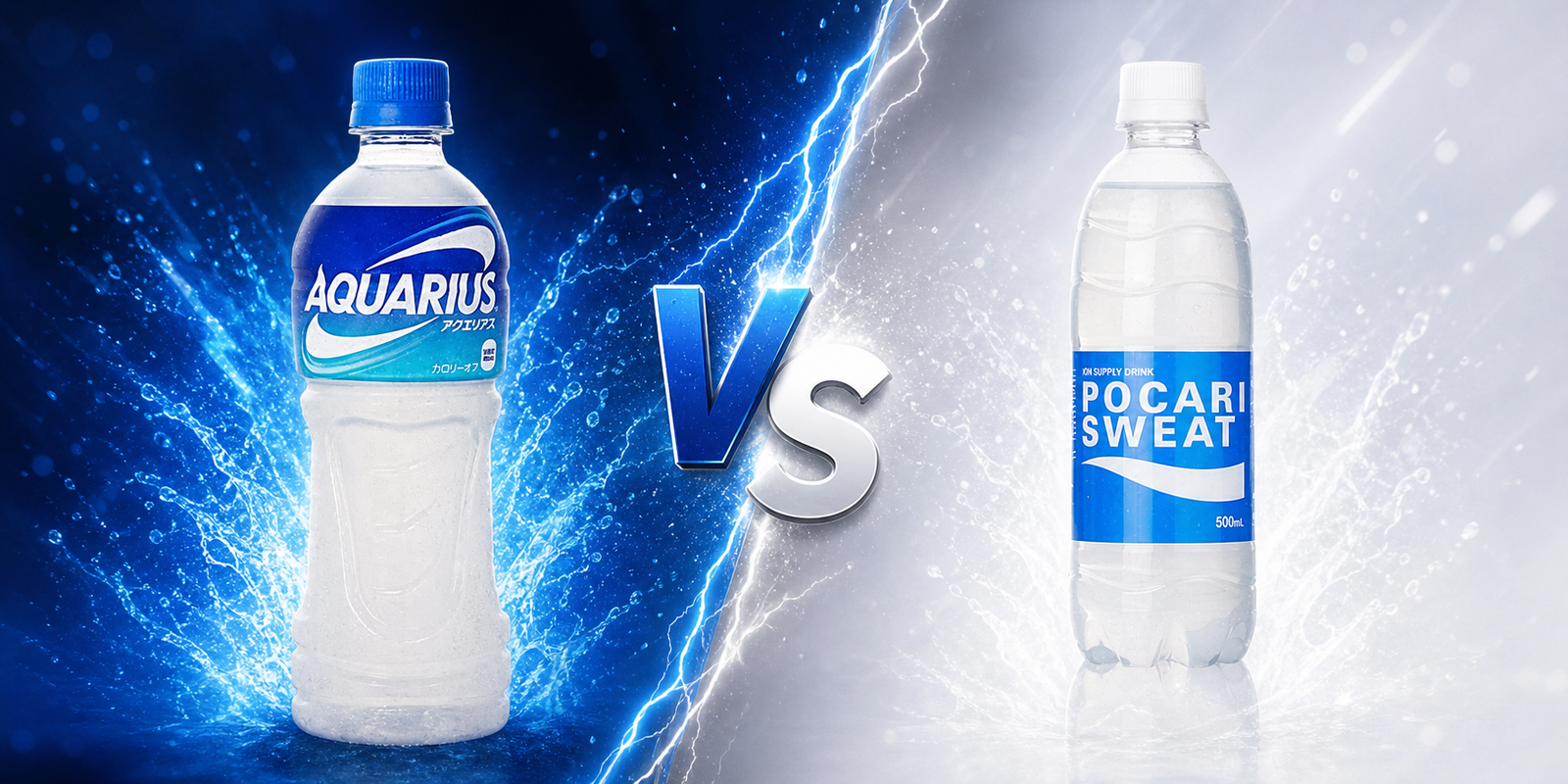
When it comes to staying hydrated, especially during exercise, hot weather, or illness recovery, not all sports drinks are created equal. Two of Asia’s most iconic hydration beverages, Pocari Sweat and Aquarius are constantly compared by athletes, everyday consumers, and health-conscious individuals across Japan and beyond. But which one is actually better for your needs?
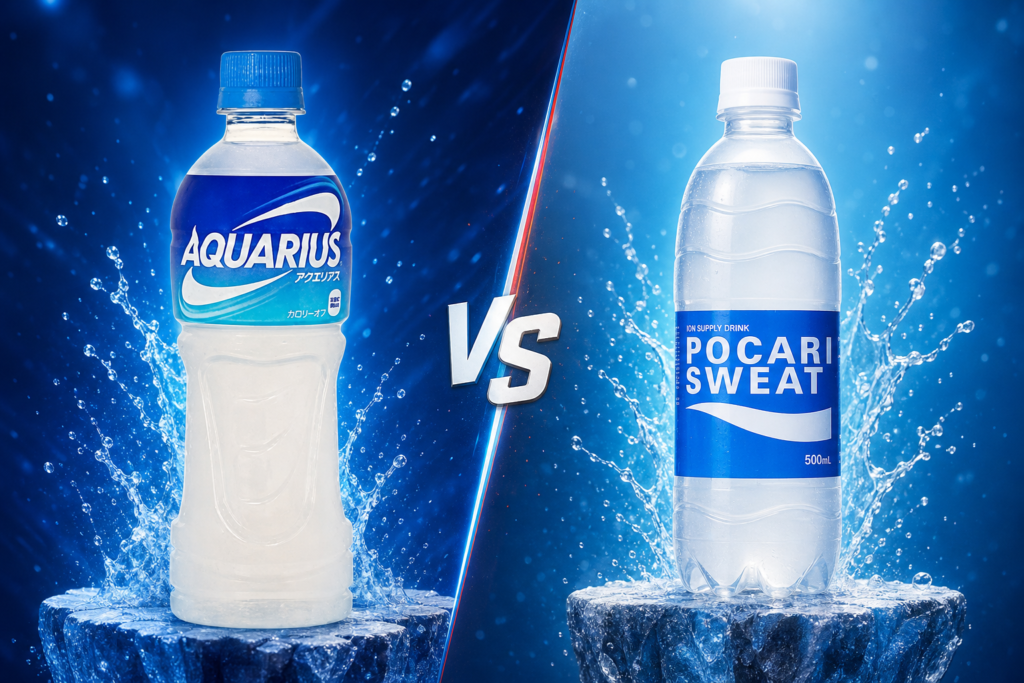
In this in depth comparison of Pocari Sweat vs Aquarius, we’ll break down their ingredients, electrolyte profiles, taste, science, pricing, and best use cases so you can make the smartest hydration choice.
Table of Contents
Quick Comparison: Pocari Sweat vs Aquarius
| Feature | Pocari Sweat | Aquarius |
|---|---|---|
| Origin | Japan (1980) | Japan (1983) |
| Manufacturer | Otsuka Pharmaceutical | The Coca-Cola Company |
| Type | Isotonic sports drink | Isotonic sports drink |
| Best For | Illness, heavy dehydration, intense recovery | Light exercise, daily hydration, fatigue relief |
| Electrolytes | Higher (Na, K, Ca, Mg) | Moderate (Na, K, Mg, Ca) |
| Added Amino Acids | No | Yes (BCAAs: Isoleucine, Valine, Leucine) |
| Added Vitamins | No (standard formula) | Yes (Vitamin C, B complex in some variants) |
| Sugar Level | Higher (~27g/500ml) | Lower (~23g/500ml) |
| Calories | ~130 kcal/500ml | ~95 kcal/500ml |
| Sugar-Free Option | Pocari Sweat Ion Water | Aquarius Zero |
| Price | Budget-friendly | Budget-friendly |
| Our Pick | Best for medical-grade rehydration | Best for light, everyday sport hydration |
Keep reading for a full breakdown of every category below!
What Is Pocari Sweat?
Pocari Sweat is produced by the Japanese company Otsuka Pharmaceutical and was introduced in 1980. It was designed to mimic the body’s natural fluid balance, meaning its electrolyte composition is intentionally similar to human sweat and blood plasma.
Pocari Sweat’s parent company, Otsuka, is an expert on human physiology and has been developing IV solutions since 1946. Using this specialist knowledge, Pocari Sweat was born in 1980 as a hydration drink that effectively restores water and electrolytes lost through sweat.
Pocari Sweat is a mild-tasting, non-carbonated sweet beverage and is advertised as an “ion supply drink.” It has a mild grapefruit flavor with little aftertaste. It is sold in aluminium cans, PET bottles, and as a powder for mixing with water.
Key Ingredients: Sugar (Japan-processed), high fructose corn syrup, fruit juice, salt/acidulant, fragrance, potassium chloride, calcium lactate, flavor enhancer (amino acids), magnesium chloride, and antioxidants (vitamin C). Otsuka Pocari Sweat contains seven ions consisting of Na+ (21 mEq/L), K+ (5), Ca2+ (1), Mg2+ (0.5), Cl- (16.5 mEq/L), citrate3- (10), and lactate- (1).
What Is Aquarius?
AQUARIUS® is a functional hydration drink with electrolytes, developed in 1983 in Japan to help active people rehydrate and replace lost minerals.
The development was driven by the need to provide a refreshing, citrus-based alternative to existing salty-tasting options like Pocari Sweat. Coca-Cola Japan’s research and development team played a pivotal role, autonomously creating the product based on contemporary sports science principles focused on rapid hydration and mineral restoration for active individuals. From The Coca-Cola Company, Aquarius is for the modern, health-conscious consumer. It focuses on low-sugar, low-calorie hydration with a bonus: added B vitamins to fight fatigue.
Produced by Coca-Cola Japan, Aquarius is another iconic Japanese sports drink that rivals Pocari Sweat. It offers a slightly sweeter flavor and includes amino acids that promote muscle recovery. Aquarius is particularly popular among young athletes and outdoor enthusiasts.
Key Ingredients: High-fructose corn syrup, table salt, citric acid, flavoring, sodium citrate, potassium chloride, magnesium sulfate, calcium lactate, antioxidant (vitamin C), sweeteners (sucralose, acesulfame potassium), isoleucine, valine, and leucine.
Pocari Sweat vs Aquarius: Head-to-Head Comparison
Electrolyte Content
The biggest difference between the two drinks is their electrolyte balance. Pocari Sweat has the most comprehensive electrolyte profile, including calcium and magnesium, which are often missing in other drinks.
Aquarius features an electrolyte mix of sodium, potassium, and magnesium, though in slightly lower concentration than Pocari Sweat, with around 23g of sugar per 500ml and approximately 95 kcal, making it lighter. When you sweat heavily, the body loses sodium more than any other mineral.
Because Pocari Sweat contains more sodium, it often restores hydration faster during dehydration or illness. Aquarius is better suited for lighter physical activity where the electrolyte loss is smaller.
Winner: Pocari Sweat for comprehensive electrolyte replenishment; Aquarius for lighter, everyday mineral top-up.
Hydration Science & Technology
Pocari Sweat was born from a wild idea: a “drinkable IV.” Inspired by a researcher’s dehydration ordeal in Mexico, it’s designed to mimic the body’s natural fluid balance. Its isotonic formula meaning it has a similar electrolyte concentration to human blood helps it absorb quickly. Pocari Sweat has been clinically proven to provide faster hydration than water and other fructose-rich drinks.
Trials found that those who drank Pocari Sweat retained more fluid and had higher plasma volume than those who drank water alone both of which play an essential role in transferring nutrients around the body. Clinical trials show that even two hours after drinking Pocari Sweat, your body retains 57% of fluids, compared to just 38% when drinking water.
Aquarius, introduced by Coca-Cola Japan in 1983, was a direct response to Pocari Sweat’s success. It’s another isotonic drink, but with a zestier profile. Aquarius, which is fortified with branched-chain amino acids (BCAAs) and citric acid, is sold as an exercise enhancement drink.
Winner: Pocari Sweat for sheer rehydration science; Aquarius for exercise enhancement with added BCAAs.
Sugar & Calorie Content
Both drinks contain sugar because carbohydrates help the body absorb water and electrolytes faster. Pocari Sweat is slightly sweeter and more energy dense. Aquarius has a lighter sugar profile, which many people prefer during exercise because it feels less heavy
Pocari’s higher sugar (~27g vs. ~23g per 500ml) and calories (~130 vs. ~95 kcal) make it more energy-dense, ideal for athletes or those needing a quick recovery. Aquarius, with fewer carbs and calories, suits daily hydration or lighter activities. A 500ml bottle of Pocari Sweat contains approximately 31g of carbohydrates and 125 kcal, while Aquarius contains approximately 23g of carbohydrates and 95 kcal.
Winner: Aquarius for calorie-conscious and daily drinkers; Pocari Sweat for high-energy replenishment needs.
Added Vitamins & Amino Acids
This is where the two drinks diverge most clearly in their formulation philosophy. Aquarius is the clear winner for those watching their sugar and calorie intake, and it’s the only one with added vitamins (B3, B5, B6, B9, B12) specifically for energy metabolism. Aquarius contains ingredients that Pocari doesn’t have, like three essential amino acids. Aquarius, which is fortified with branched-chain amino acids (BCAAs) and citric acid, is sold as an exercise enhancement drink.
Pocari Sweat, on the other hand, keeps its formula intentionally clean and pharmaceutical-grade. Developed by Otsuka Pharmaceutical, Pocari Sweat isn’t just a drink; it’s a health product. Its infamous name says it all it’s designed to be as close to what you lose in sweat as possible, making it a “drinkable drip” for rapid, efficient rehydration. Its mission is pure, scientific replenishment.
Winner: Aquarius if you want added vitamins and amino acids for fatigue recovery and muscle support. Pocari Sweat if you prefer a clean, pure electrolyte formula without extras.
Flavor & Taste
Pocari Sweat’s mild grapefruit flavor is smooth and inoffensive, like sipping a diluted fruit juice. It’s easy to gulp down, even when panting post-run. Pocari Sweat has a strong sweet and salty taste, and it provides a refreshing, “soaking in” sensation when consumed during illness or after heavy sweating.
Aquarius, with its zesty citrus kick, feels more like a treat almost soda-like. But its slight acidity can leave a faint aftertaste after drinking a whole bottle. Aquarius is low in calories and has a clean aftertaste due to artificial sweeteners, making it easy to drink daily though those who dislike the taste of artificial sweeteners should be aware. During long workouts, some athletes actually prefer Aquarius because very sweet drinks can feel thick or sticky while exercising.
Winner: Pocari Sweat for a smooth, neutral, all-day sip, Aquarius for a bolder, citrusy, refreshing kick.
Format & Availability
Pocari Sweat is sold in aluminium cans, PET bottles, and as a powder for mixing with water. It was launched in 1980 and is sold across Asia and the Middle East; it is also available in Australia, Mexico, and the United States. Aquarius comes in several variants including Aquarius Zero (sugar-free), Vitamin (with added nutrients), and Sparkling (carbonated). Its flavor is citrus-based with a slight acidity. It is available in cans and PET bottles, with no powder option. Aquarius is less common in North America, which is why many international consumers discover Pocari Sweat first.
Winner: Pocari Sweat for global availability and format variety (including powder). Aquarius for product line diversity with multiple variants including sparkling and zero-sugar.
Price & Value
Both drinks are positioned as everyday sports beverages and are comparably priced in Asian markets. 6Pocari Sweat is typically priced in the range of $1.50–$3 per bottle. Aquarius is similarly priced in Japan and across Asia, making them both accessible, budget-friendly options for daily hydration.
Winner: Tie both are affordably priced and offer excellent value for their respective use cases.
Safety & Daily Use
Both drinks lack caffeine, so they’re safe for kids or evening use. Experts see no harm in drinking electrolyte-enhanced beverages to help replenish water and energy lost during exercise, especially during prolonged physical activity. However, they do warn that they contain a lot of sugar, which isn’t necessary or recommended for people who are less active. Drinking large amounts when not burning them off through exercise can lead to excess energy and rapid spikes in blood sugar, which increases the risk of obesity and diabetes.
The key takeaway: use both drinks strategically to complement your regular water intake not as a full replacement.
When Should You Choose Pocari Sweat?
Pocari Sweat is best for endurance exercise or heavy sweating, where solid salt and sugar replenishment is a priority. Consider reaching for it when:
- You are sick, feverish, or recovering from illness
- You’ve experienced heavy sweat loss during intense exercise
- You’re working in hot, high-humidity environments
- You want a clean, pharmaceutical-grade rehydration drink
- You need a drink that closely mirrors your body’s own fluid composition
- You prefer a gentle, mildly sweet flavor you can drink in large quantities
For example, construction workers in hot Asian climates often choose Pocari Sweat because it replaces lost electrolytes more aggressively.
When Should You Choose Aquarius?
Aquarius is better suited for lighter physical activity where the electrolyte loss is smaller. It’s the better pick when:
- You’re doing casual exercise, walking, hiking, or gym sessions
- You want post-workout fatigue relief thanks to BCAAs
- You prefer a lower-calorie, lower-sugar hydration drink for daily use
- You want added B vitamins to combat tiredness
- You enjoy a zesty, citrus-forward, more refreshing flavor
- You’re looking for a zero-sugar option (Aquarius Zero)
Aquarius is particularly popular among young athletes and outdoor enthusiasts. Its gentle flavor makes it a great everyday hydration choice, even for those not engaged in sports.
Can You Use Both?
Absolutely and combining them might be the smartest strategy of all.5 Both Pocari Sweat and Aquarius are excellent sports drinks that efficiently replenish fluids and electrolytes. However, their ingredients and design philosophies differ slightly, making them suitable for different purposes.
Think of Pocari Sweat as your go-to when your body needs serious, medically-inspired rehydration. Then reach for Aquarius when you’re after a lighter, refreshing top-up on a regular training day or a hot afternoon. Pocari Sweat behaves more like a hydration solution. Aquarius behaves more like a sports drink. Together, they cover the full hydration spectrum.
Final Verdict: Pocari Sweat vs Aquarius
There’s no single winner in the Pocari Sweat vs Aquarius showdown, it all comes down to your body’s needs at any given moment. Fans on both sides have strong opinions about which sports drink reigns supreme, but experts think neither is better than the other they each have their own strengths.
Here’s the simple breakdown:
- ✅ Choose Pocari Sweat if you need deep, medical-grade rehydration, especially during illness, heat exhaustion, or intense physical exertion. Its higher sodium content and pharmaceutical heritage make it a powerhouse for serious hydration.
- ✅ Choose Aquarius if you want a lighter, low-calorie drink with added BCAAs and vitamins that supports everyday sport activity and fatigue recovery without the extra sugar.
As one nutrition expert put it: “Pocari Sweat has more sugar, salt and calories than Aquarius, and it’s ideal when you’re feeling low on energy, like if you have a cold or a hangover. Aquarius contains ingredients that Pocari doesn’t have like three essential amino acids and citric acid, and it’s effective for mid and post-workout fatigue recovery.”
The smartest move? Keep both on hand and drink according to what your body is actually asking for.

With a Bachelor’s in Biology and Health and a Master’s degree in Quality Control of Foods and Drugs, I review dietary supplements using scientific analysis, ingredient verification, and safety standards to provide transparent and reliable recommendations.