Bloom Pop vs Olipop Wish Probiotic Soda is better For You!
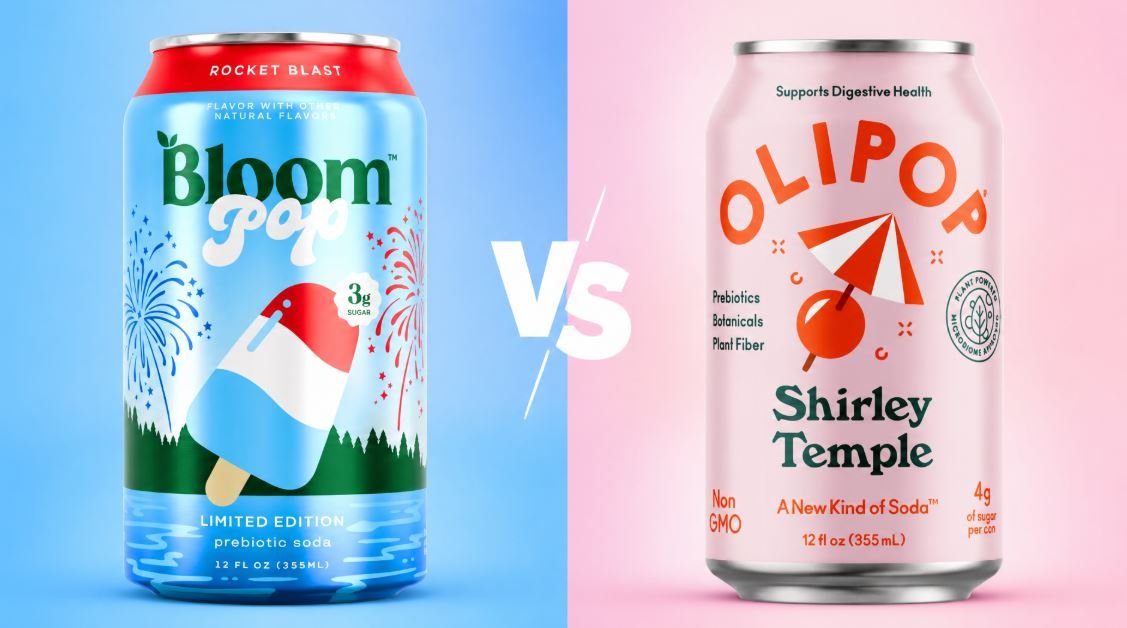
If you’re searching for Bloom Pop vs Olipop soda, you’re likely trying to decide which prebiotic soda is better for gut health, taste, and overall value as a healthier soda alternative.
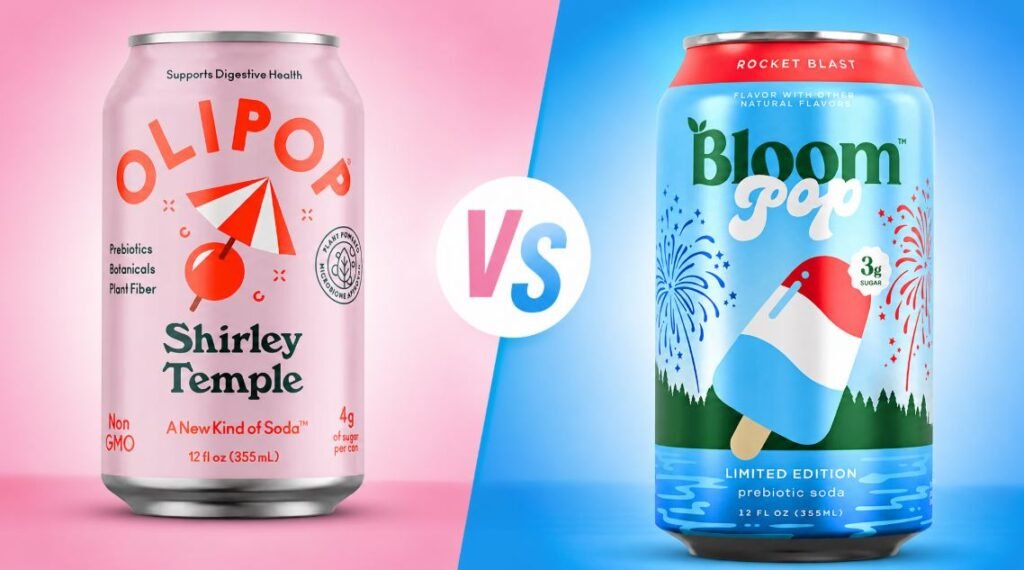
When looking at Bloom Pop vs Olipop soda, both brands position themselves as better-for-you, low-sugar sodas designed to support digestive wellness and satisfy soda cravings without the guilt. But while they share shelf space in the functional soda aisle, their ingredient philosophy, prebiotic approach, fiber content, and flavor personality are quite different.
Table of Contents
Quick Comparison: Bloom Pop vs Olipop
| Feature | Bloom Pop | Olipop |
|---|---|---|
| Calories | ~20 per can | ~35–50 per can |
| Sugar | 3–4g | 2–5g |
| Fiber | ~1g (PreticX™ prebiotic) | ~9g (OLISMART™ blend) |
| Prebiotic Type | Xylooligosaccharides (XOS) | Chicory root inulin, cassava root fiber, Jerusalem artichoke inulin |
| Sweetener | Organic cane sugar + Stevia (Reb M) | Cassava root syrup, allulose syrup + Stevia |
| Apple Cider Vinegar | Yes (organic) | No |
| Caffeine | 0 mg | 0 mg (most flavors) |
| Carbonation | Moderate fizz | Fully carbonated |
| Positioning | Fun, low-cal soda swap | Fiber-rich functional soda |
Bloom Pop Ingredients
Bloom Pop is a refreshing, low-calorie prebiotic soda designed to deliver bold flavor with ingredients that support gut health. It uses a simple, clean ingredient list with a focused prebiotic approach.
Bloom Pop Ingredient Breakdown
Carbonated Water: The fizzy base of every can.
Organic Cane Sugar (3–4g per can): Bloom uses fruit juice, organic cane sugar, and stevia to give its soda a perfectly sweet, authentic flavor. At just 3–4g, this is dramatically less than a traditional soda’s 39g.
Prebiotic Xylooligosaccharides (PreticX™, 1g dose): Unlike some prebiotic sodas that rely on high amounts of fiber that can cause bloating, Bloom Pop is formulated with PreticX™ XOS (xylooligosaccharide) a patented prebiotic shown to deliver gut-balancing and metabolism benefits at low doses, without digestive discomfort.
Fruit Juice Concentrates (varies by flavor): Ingredients include Carbonated Water, Organic Cane Sugar, Prebiotic Xylooligosaccharides, Citric Acid, Strawberry Juice Concentrate, Sodium Citrate, Natural Flavor, Stevia Leaf Extract (Rebaudioside M), Organic Apple Cider Vinegar. The juice concentrates vary by flavor (cranberry, pear, strawberry, etc.).
Stevia Leaf Extract (Rebaudioside M): A high-purity stevia extract known for a cleaner, less bitter taste than standard stevia. Provides additional sweetness with zero calories.
Organic Apple Cider Vinegar: A small inclusion that adds a mild tangy note and is associated with blood sugar and digestive support in traditional wellness use, though amounts in a soda are typically low.
Citric Acid & Sodium Citrate: Standard acidity regulators that enhance flavor brightness and shelf stability.
Olipop Ingredients
Olipop spent years formulating their product to find a sweet balance of plant fiber, prebiotics, and botanicals to create a fizzy drink that promotes healthy digestion. Olipop’s formula is notably more complex than most prebiotic sodas.
Olipop Ingredient Breakdown
Carbonated Water: The sparkling base.
OLISMART™ Proprietary Blend (~9g fiber): This is Olipop’s signature and its biggest differentiator. 17All Olipop flavors include their OLISMART concoction of cassava root fiber, chicory root inulin, Jerusalem artichoke inulin, as well as extracts of nopal cactus, marshmallow root, calendula flower, and kudzu root. These ingredients make up the gut-healthy prebiotic blend that adds 9 grams of fiber to each can.
- Cassava Root Fiber: Cassava is a root vegetable that’s rich in prebiotic fibers. Serves as both a prebiotic source and natural sweetener (via cassava root syrup).
- Chicory Root Inulin: Research has found that chicory root promotes digestion, can help regulate appetite, and reduces the risk of gastrointestinal diseases.
- Jerusalem Artichoke Inulin: Another potent source of inulin fiber that feeds beneficial Bifidobacteria in the gut.
- Nopal Cactus Extract: A traditional botanical associated with blood sugar support and antioxidant properties.
- Marshmallow Root Extract: Marshmallow root is an ingredient known for soothing a variety of ailments. Many of marshmallow root’s alleviating abilities are due to its mucilage, a dense, glutinous material composed of protein and polysaccharides.
- Calendula Flower Extract: A botanical traditionally used for its anti-inflammatory and soothing digestive properties.
- Kudzu Root Extract: A plant used in traditional medicine for various digestive and metabolic support purposes.
Cassava Root Syrup & Allulose Syrup: Natural sweeteners that keep the sugar content low while providing a satisfying sweetness. Allulose is a rare sugar that provides about 70% of sugar’s sweetness with minimal caloric impact.
Stevia Leaf Extract: Provides additional zero-calorie sweetness.
Himalayan Pink Salt: A small inclusion that rounds out flavor and adds trace minerals.
Fruit Juice Concentrates (varies by flavor): Apple, lemon, cherry, quince, ginger, and others depending on the specific flavor.
Fiber Comparison: Which Has More?
| Bloom Pop | Olipop | |
|---|---|---|
| Fiber per can | ~1g | ~9g |
| % Daily Value (based on 28g) | ~4% | ~32% |
| Fiber Type | XOS (Xylooligosaccharides) | Inulin, Cassava Root Fiber, Jerusalem Artichoke Inulin |
Olipop wins on fiber content by a significant margin. Olipop is a fiber-packed prebiotic soda with just 35 calories per can, delivering 9g of gut-friendly fiber from chicory root, cassava, and botanicals. Olipop delivers 32% of your daily fiber in one can with only 35 calories.
Bloom Pop’s soda contains PreticX prebiotic to support gut health in a 1-gram dose. However, Bloom Pop’s approach is intentionally different, while many prebiotics require high doses and can lead to bloating or discomfort for some, PreticX™ works gently and efficiently to nourish the good bacteria in your gut, especially Bifidobacteria, which play a key role in digestion, immunity, and metabolism.
The bottom line: Olipop gives you far more dietary fiber per can. Bloom Pop prioritizes a gentler prebiotic dose designed to minimize digestive side effects. Both approaches have merit depending on your digestive tolerance and goals.
Gut Health: Marketing vs Reality
Both brands use gut-health-forward marketing, with terms like “prebiotic,” “digestive support,” and “microbiome.”
Here’s what science supports:
- Prebiotic fibers (inulin, XOS, cassava fiber) can feed beneficial gut bacteria, particularly Bifidobacteria
- Higher fiber doses (like Olipop’s 9g) provide more substrate for bacterial fermentation, but may also increase gas and bloating in sensitive individuals
- Lower prebiotic doses (like Bloom Pop’s 1g XOS) may still shift the microbiome positively with fewer digestive side effects
- Harvard nutrition experts note that fiber from whole foods (fruits, vegetables, legumes) provides broader health benefits than isolated fiber in beverages.
In practical terms:
Neither drink is a substitute for a fiber-rich whole-food diet.
Gut health still requires:
- Diverse fiber from fruits, vegetables, legumes, and whole grains
- Adequate hydration
- Consistent sleep
- Reduced ultra-processed food intake
Prebiotic sodas can be a helpful addition to a healthy diet, but they are supplements to not replacements for real food-based gut support.
Flavors & Taste: What to Expect from Bloom Pop and Olipop
When it comes to taste and flavor variety, both brands aim to replicate the nostalgic soda experience, but with very different personalities and flavor depth.
Bloom Pop Flavor Experience
Bloom Pop flavors lean playful, nostalgic, and approachable with a lighter, sweeter soda-like personality. 1Bloom Pop is delightfully fizzy, flavor-packed, and guilt-free with 3-4g of sugar, 20 calories, and clinically-backed prebiotics that deliver real gut health benefits. Available in five craveable flavors, Shirley Temple, Classic Orange, Raspberry Lemonade, Strawberry Cream, and Watermelon Lime.
- Shirley Temple: Sweet, cherry-forward nostalgia in a can, a fan favorite
- Classic Orange: Bright citrus with a clean, smooth finish
- Raspberry Lemonade: Tart, tangy, and refreshing with a summer-day vibe
- Strawberry Cream: Dessert-like sweetness with a creamy strawberry profile
- Watermelon Lime: Light, refreshing, and slightly tropical
Bloom Pop’s flavor lineup is designed to taste like the soda you grew up with sweet, fun, and satisfying while keeping the ingredient list simple and the calorie count ultra-low.
Olipop Flavor Experience
Olipop offers a much larger and more diverse flavor range, leaning into classic soda nostalgia with a slightly earthier, more complex taste profile due to the OLISMART botanical blend. Olipop offers flavors including Vintage Cola, Classic Root Beer, Classic Grape, Strawberry Vanilla and more.
Popular Olipop flavors include:
- Vintage Cola: A spiced, complex take on cola with cinnamon and vanilla undertones
- Classic Root Beer: Lighter and less syrupy than traditional root beer, with herbal depth
- Strawberry Vanilla: Sweet and creamy with a dessert-forward profile
- Orange Squeeze (Orange Cream): Creamsicle-inspired with balanced citrus and vanilla
- Ginger Lemon: Bright, zippy, and refreshing — a clean palate refresher
- Cherry Vanilla: Tart cherry balanced with smooth vanilla
- Crisp Apple: Sparkling apple with a surprisingly crisp, fresh-fruit flavor
- Classic Grape: Nostalgic grape soda vibes with lighter sweetness
- Watermelon Lime: Summery and refreshing (though polarizing among fans)
- Tropical Punch: Juicy, fruit-punch-forward with Hawaiian Punch nostalgia
- Banana Cream: A niche, divisive flavor with a dedicated fanbase
- Shirley Temple: Cherry-lemon sweetness, a direct competitor to Bloom’s version
The only potential downside to Olipop is that its unique flavor profile may take a can or two to grow on traditional soda drinkers. The botanical blend (OLISMART) can create a subtle earthy undertone that some first-time drinkers notice.
Flavor Summary
| Bloom Pop | Olipop soda | |
|---|---|---|
| Flavor Range | 5 flavors (at launch) | 15+ flavors |
| Taste Profile | Sweet, clean, soda-like | Nostalgic soda with herbal depth |
| Carbonation | Moderate, smooth fizz | Full, lively carbonation |
| Sweetness Style | Candy-sweet, approachable | Balanced, slightly complex |
| Aftertaste | Minimal | Some botanical/stevia notes |
If you like straightforward, sweet soda flavor with no funky aftertaste → Bloom Pop may appeal more. If you enjoy complex, classic soda flavors and want more variety, Olipop gives you far more options.
Sugar & Sweetener Breakdown
| Bloom Pop | Olipop | |
|---|---|---|
| Total Sugar | 3–4g | 2–5g |
| Sweetener Sources | Organic cane sugar, stevia (Reb M) | Cassava root syrup, allulose syrup, stevia |
| Artificial Sweeteners | None | None |
Each Bloom Pop can contains 3-4 grams of sugar, 20 calories, and no artificial ingredients or sweeteners. One can of Olipop has 2 to 5 grams of added sugars, unlike many other traditional sodas which can contain upwards of 40 grams per 12 fl oz can.
Both brands are dramatically lower in sugar than conventional soda (~39g per can). Neither contains artificial sweeteners, both rely on stevia and natural sugar sources for sweetness.
Olipop’s use of allulose is notable, it’s a rare sugar that tastes like real sugar but contributes minimal calories and doesn’t spike blood sugar the way regular sucrose does.
Caffeine Content
Both Bloom Pop and Olipop are caffeine-free in their standard prebiotic soda lines, making them suitable for any time of day, including evenings.
(Note: Bloom Nutrition also makes Bloom Sparkling Energy, a separate product with 180mg of caffeine, but Bloom Pop, the prebiotic soda, contains zero caffeine. Similarly, some Olipop varieties may contain trace amounts of naturally occurring caffeine from green tea extract, but this is negligible.)
Digestive Comfort & Bloating Potential
This is an important real-world consideration when choosing between Bloom Pop and Olipop.
Bloom Pop (1g prebiotic fiber):
- Very unlikely to cause bloating or gas
- Bloom Pop is formulated with PreticX™ XOS, a patented prebiotic shown to deliver gut-balancing and metabolism benefits at low doses.
- Ideal for people new to prebiotic drinks or those with sensitive digestion
Olipop (9g prebiotic fiber):
- More likely to cause gas, bloating, or cramping, especially when first introduced
- More than 2 cans daily provides 18g+ fiber from one source, which may cause bloating, gas, or digestive discomfort, especially for those not accustomed to high fiber intake.
- Recommended to build tolerance gradually
The bottom line: If you have a sensitive stomach or are new to functional sodas, Bloom Pop’s gentler approach may be more comfortable. If you tolerate fiber well and want to boost your daily intake, Olipop delivers substantially more digestive fuel per can.
Price & Availability
| Bloom Pop | Olipop | |
|---|---|---|
| Approx. Price per Can | ~$1.50–$2.00 | ~$2.50–$3.00 |
| Retail Availability | Walmart (exclusive at launch), expanding | Widespread — Walmart, Target, Whole Foods, Kroger, Amazon, and more |
| Online | bloomnu.com, Amazon | drinkolipop.com, Amazon |
After turning heads with its debut at Expo West 2025, Bloom Pop launched exclusively in all Walmart stores nationwide. Olipop has established itself as a dominant force in the functional soda market, generating $400 million in revenue in 2024 and achieving a valuation of $1.85 billion.
Olipop has a significant head start in distribution and brand recognition. Bloom Pop is newer to market but benefits from Bloom Nutrition’s massive wellness community and social media following.
Safety Considerations
Both drinks are generally safe for healthy adults. However:
- Olipop’s high fiber content (9g per can) may cause digestive discomfort if consumed in excess or without gradual introduction
- Bloom Pop’s apple cider vinegar is present in small amounts and unlikely to cause issues, but very large ACV intake can irritate the stomach lining
- Neither contains artificial sweeteners, but both use stevia — which some individuals find causes mild digestive sensitivity
- Neither drink contains significant allergens, though always check labels if you have specific sensitivities
- Whenever functional herbs and ingredients are in the mix, it’s important to chat with your doctor. Some of these ingredients aren’t recommended to combine with certain medications.
Final Verdict: Bloom Pop vs Olipop
Choose Bloom Pop if:
- You want ultra-low calories (~20 per can)
- You prefer a gentle prebiotic dose that won’t upset your stomach
- You enjoy sweet, clean, straightforward soda flavors
- You want no artificial ingredients or sweeteners
- You’re new to prebiotic sodas and want an easy entry point
- You value simplicity in your ingredient list
Choose Olipop if:
- You want maximum fiber (~9g per can, 32% daily value)
- You enjoy diverse, complex, nostalgic soda flavors (15+ options)
- You want a more botanically rich formula with multiple prebiotic fiber sources
- You tolerate fiber well and want to boost daily fiber intake
- You prefer a sparkling, fully carbonated drinking experience
- You want a brand with widespread availability and extensive retail presence
Neither drink replaces a balanced, fiber-rich diet.
The real difference in the Bloom Pop vs Olipop debate comes down to:
- Fiber goals — Do you want a significant fiber boost (Olipop) or a gentler prebiotic nudge (Bloom Pop)?
- Digestive tolerance — Sensitive stomach? Bloom Pop is safer. Fiber-tolerant? Olipop delivers more.
- Flavor preference — Sweet and simple (Bloom Pop) vs. complex and nostalgic (Olipop)
- Calorie priority — Bloom Pop’s 20 calories vs. Olipop’s 35–50 calories
If gut health is your goal, what you eat every day matters far more than what’s in the can. Both drinks are solid soda swaps, but they work best as part of a well-rounded, whole-food-based diet — not as standalone gut health solutions.
Scientific References Overview
- Xylooligosaccharides (XOS) Finegold, S. M., Li, Z., Summanen, P. H., et al. (2014). “Xylooligosaccharide increases bifidobacteria but not lactobacilli in human gut microbiota.” Food & Function, 5(3), 436-445. (Confirms that low doses of 1.2g to 2.8g increase beneficial bacteria without significant gastrointestinal distress).
- Chicory Root Inulin Micka, A., et al. (2017). “Effect of consumption of chicory inulin on bowel function in healthy subjects with constipation: a randomized, double-blind, placebo-controlled trial.” International Journal of Food Sciences and Nutrition, 68(1), 82-89. (Demonstrates chicory root’s ability to improve regularity and support digestion).
- Cassava Root Fiber Harrison, C. J., et al. (2020). “The Impact of Plant-Derived Prebiotic Fibers on the Human Gut Microbiota.” Nutrients, 12(11), 3247. (Reviews how plant-derived fibers like cassava/tapioca resist digestion in the upper GI tract to successfully feed the gut microbiome).
- Jerusalem Artichoke Inulin Rubel, A. E., et al. (2014). “Inulin from Jerusalem artichoke: extraction, characterization and application as a prebiotic.” Food Research International, 62, 59-65. (Analyzes Jerusalem artichoke as a highly concentrated natural source of inulin that stimulates Bifidobacteria).
- Stevia (Rebaudioside M/A) Ruiz-Ojeda, F. J., et al. (2019). “Effects of Sweeteners on the Gut Microbiota: A Review of Experimental Studies and Clinical Trials.” Advances in Nutrition, 10(suppl_1), S31-S48. (Concludes that stevia is a zero-calorie option that does not negatively alter gut microbiome composition or spike blood sugar at normal intake levels).
- Apple Cider Vinegar Johnston, C. S., et al. (2004). “Vinegar Improves Insulin Sensitivity to a High-Carbohydrate Meal in Subjects With Insulin Resistance or Type 2 Diabetes.” Diabetes Care, 27(1), 281-282. (The landmark study showing acetic acid/vinegar blunts blood sugar spikes, noting that clinical benefits require tablespoon-sized doses).
- Prebiotic Fiber & Gut Health Gibson, G. R., et al. (2017). “Expert consensus document: The International Scientific Association for Probiotics and Prebiotics (ISAPP) consensus statement on the definition and scope of prebiotics.” Nature Reviews Gastroenterology & Hepatology, 14(8), 491-502. (The definitive global consensus confirming isolated prebiotics benefit the gut, while maintaining that whole-food dietary fiber remains essential).

With a Bachelor’s in Biology and Health and a Master’s degree in Quality Control of Foods and Drugs, I review dietary supplements using scientific analysis, ingredient verification, and safety standards to provide transparent and reliable recommendations.