Epicatechin for Muscle Growth: Benefits, Dosage, Science & Best Supplements
Epicatechin for Muscle Growth is becoming increasingly popular among bodybuilders and athletes looking for advanced ways to enhance their results.
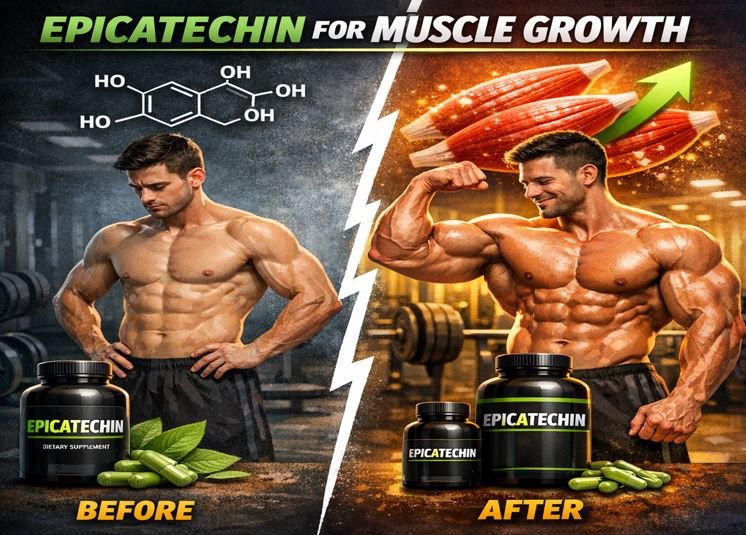
Often described as a natural myostatin inhibitor, epicatechin may help support muscle development, strength, and recovery when combined with proper training and nutrition. But how effective is it really? Let’s take a closer look at what the science says.
Table of Contents
So, What Exactly Is Epicatechin?
Epicatechin is a natural compound found in everyday foods like dark chocolate, green tea, and cocoa. It belongs to a family of plant nutrients called flavanols, the same stuff that makes dark chocolate “healthy.”
Now, here’s the exciting part. Scientists discovered that this little compound might actually help you build more muscle. And no, it’s not a steroid. It’s not a hormone. It’s completely natural. That’s why epicatechin has been getting a lot of attention lately from bodybuilders, athletes, and even regular gym-goers who want a safe and natural edge.
How Does Epicatechin Help You Build Muscle?
To understand how epicatechin works, you need to know about two things your body already makes:
Meet Myostatin: Your Muscle’s Worst Enemy
Your body produces a protein called myostatin. Think of it like a “stop sign” for your muscles. Its job is to limit how much muscle you can grow. The more myostatin you have, the harder it is to pack on size.
As you get older (starting around your 30s), your body actually makes more myostatin. That’s one big reason why it gets harder to build muscle as you age.
Meet Follistatin: Your Muscle’s Best Friend
On the flip side, your body also makes something called follistatin. This one does the opposite it blocks myostatin and lets your muscles grow more freely.
Here’s Where Epicatechin Comes In
Epicatechin works by increasing follistatin and decreasing myostatin. In simple terms, it helps remove the “brakes” on your muscle growth. Your body becomes more willing to build and keep muscle.
Pretty cool, right?
But Wait, There’s More
Epicatechin doesn’t just mess with myostatin. It does a bunch of other good stuff too:
1. Better Blood Flow
Epicatechin helps your body produce more nitric oxide. That’s the molecule that opens up your blood vessels and gets more blood flowing to your muscles. More blood flow means more oxygen, more nutrients, and better pumps during your workouts.
2. More Energy at the Cellular Level
Your muscle cells have tiny power plants called mitochondria. Epicatechin can help your body create more of them. More mitochondria = more energy = better performance in the gym.
3. Helps Your Body Repair Muscle
After a tough workout, your muscles need to repair and rebuild. Epicatechin may support this process by helping your body with muscle protein synthesis — basically, the process of building new muscle tissue.
4. May Help Burn Fat
Some research suggests epicatechin can also support fat breakdown and fat burning, which is a nice bonus if you’re trying to get lean while building muscle.
What Does the Science Say?
Okay, let’s look at what actual studies have found. Don’t worry — I’ll keep it simple.
Animal Studies
In studies done on mice, epicatechin showed some impressive results:
- Myostatin levels dropped significantly (by 15–21%)
- Follistatin levels increased by up to 56% in older mice
- Old mice that took epicatechin had myostatin levels similar to young, untreated mice
That last point is huge. It basically means epicatechin helped aging muscles look younger on a molecular level.
Human Studies
The human research is still early, but what we have is promising.
In one study, six middle-aged people took about 150 mg of epicatechin per day (split into two doses). After just 7 days:
- Follistatin went up by about 49%
- Myostatin went down by about 17%
- Grip strength improved
Now, this was a small study with only six people and no placebo group, so we can’t draw huge conclusions. But the direction of the results is encouraging.
In another study, seven patients with a muscle disease called Becker muscular dystrophy took 100 mg of epicatechin daily for 8 weeks. Their follistatin went up, myostatin went down, and muscle health improved.
What the Big Reviews Say
A large review of multiple studies confirmed that epicatechin consistently shows the ability to:
- Lower myostatin
- Raise follistatin
- Support muscle growth factors
The researchers called the results “promising” and noted positive effects across different study types.
One Important Warning: Cardio and Epicatechin May Not Mix Well
Here’s something interesting. One study looked at people who took epicatechin while doing cycling training (cardio). The results were not great — epicatechin actually seemed to hurt their aerobic performance and reduce something called mitochondrial density.
So what does this mean for you?
It seems like epicatechin works much better with weight training than with endurance exercise like running or cycling. If your main goal is muscle growth and you’re hitting the weights, you’re probably fine. But if you’re a marathon runner, this might not be the supplement for you.
Epicatechin Supplements: What to Buy, How Much to Take, and Side Effects
This is where things get practical. You know what epicatechin does now let’s talk about how to actually use it the right way.
What Supplements Are Available?
Epicatechin supplements come in different forms, mostly capsules and tablets, but you can also find powders and even topical gels. You can find epicatechin online in doses anywhere from 50–1,000 mg per serving.
Here are some things to look for when picking a good epicatechin supplement:
- Purity matters. When choosing an epicatechin supplement, it is essential to consider the dosage and purity of the product. The dosage of epicatechin varies from product to product, and it is crucial to select a supplement that provides an effective dose. Additionally, the purity of the supplement is essential to ensure that it does not contain any harmful additives.
- Look for added absorption boosters. Many top supplements include ingredients like Bioperine (black pepper extract) to help your body absorb epicatechin better. For example, one popular product contains 200 mg of epicatechin and 6 mg of piperine, which helps with bioavailability.
- Go with trusted brands. Choose a high-quality supplement — look for a reputable brand with a product that contains a standardized amount of epicatechin.
- It stacks well with other supplements. Epicatechin can often be combined with other supplements such as natural anabolics, test boosters, pre-workouts, protein, creatine, amino acids, etc. Because it’s a non-hormonal muscle-building ingredient, epicatechin stacks well with products like pre-workouts, creatine, ecdysterone, or turkesterone.
How Much Should You Take? (Dosage Guide)
Getting the dosage right is key. Here’s what the research and the supplement community suggest:
- Both research and empirical usage suggest that epicatechin should be dosed at 1–2 mg/kg of bodyweight. Feedback from users suggests that dosing at the higher end, around 150–200 mg or more per day, is optimal for those who want to experience its athletic and muscle-building benefits.
- Although more research needs to be done on epicatechin, 100 mg–300 mg per day is where you’ll see epicatechin dosed for the most part.
Here’s a quick example based on body weight:
| Your Weight | Low Dose (1 mg/kg) | High Dose (2 mg/kg) |
|---|---|---|
| 68 kg (150 lbs) | 68 mg/day | 136 mg/day |
| 80 kg (176 lbs) | 80 mg/day | 160 mg/day |
| 90 kg (200 lbs) | 90 mg/day | 180 mg/day |
Most people split their daily dose into two servings, one in the morning and one in the evening, or one before their workout.
Can you just eat dark chocolate instead? Technically, yes dark chocolate contains epicatechin. But you would have to consume a high amount of both dark chocolate and green tea to get a studied amount of epicatechin, so if you want the potential myostatin/follistatin benefits, you’ll need to supplement.
When Should You Take It?
Timing your epicatechin intake can potentially enhance its effectiveness, especially in relation to your physical training routines. Taking epicatechin before a workout could enhance nitric oxide production. This increase in nitric oxide can improve blood flow and nutrient delivery to the muscles, which may boost your performance and endurance during physical activities.
So if you train in the afternoon, consider taking one dose in the morning and one about 30–45 minutes before your workout.
How Long Should You Take It?
Epicatechin is both so beneficial and so harmless that it can be used for any length of time and there is no need to restrict usage to a short cycle. It’s suggested to try it for four weeks at a minimum or take it on an ongoing basis for best results.
That said, some brands recommend a slightly different approach. Some recommend taking it for 4 to 12 weeks, and after this period, taking a 4-week break before starting a new cycle.
Bottom line: Start with at least 4 weeks and see how you feel For most users, results should become noticeable around week 3 or so. For best results, users should run their cycles for a full 8 to 12 weeks.
How Long Until You See Results?
Don’t expect overnight magic. Unlike stimulants or energy enhancers, epicatechin doesn’t generally produce immediate or noticeable sensations. The effects are subtle and build over time, focusing primarily on internal health improvements rather than overt physical changes.
Over weeks or months, some users might notice improvements in muscle endurance and recovery, particularly if they are engaged in regular physical activity.
Side Effects: What You Need to Know
Here’s the good news, epicatechin is very well tolerated by most people. Reported adverse events in participants were mild to moderate and consistent with a benign side-effect profile of the study drug, which was well tolerated. There are currently no known serious side effects of epicatechin, although that does not mean there are none.
However, since it’s a concentrated supplement, some people may experience mild issues:
- Stomach discomfort: Some people may experience mild and temporary digestive discomfort like stomach cramps or nausea, particularly when taking higher doses.
- Headaches or dizziness: Epicatechin supplementation may cause headaches or dizziness in some individuals. These side effects are usually mild but can be bothersome and may require discontinuation or adjustment of the dosage.
- Allergic reactions (rare): As with any naturally derived product, there is a risk of allergic reactions, such as itching and swelling, especially in people sensitive to flavonoids.
- Drug interactions: Epicatechin could interact with certain medications, such as blood thinners or heart medication, so please consult with your healthcare professional. This compound may interact with various drugs or medications like blood thinners and diabetes medications. These interactions can alter their effect or increase the risk of side effects. Individuals taking such medications should consult a healthcare professional.
- Don’t go overboard on the dose: Usage beyond the instructed dosage can increase the risk of adverse effects, including gastrointestinal issues, headaches, and potential liver or kidney problems.
Who Should Be Extra Careful?
- Pregnant and breastfeeding women: The safety of this compound has not been established for pregnant or breastfeeding women. Due to the lack of research in this area, it is recommended that these individuals avoid epicatechin supplements.
- People with liver or kidney conditions should be particularly cautious with epicatechin supplementation.
- Women should take extra care when selecting a supplement to make sure the epicatechin isn’t combined with testosterone boosters.
The takeaway on safety: Since epicatechin is a natural anabolic, it is generally considered safe for most healthy individuals when taken in appropriate doses. However, as with any supplement, it is best to consult a healthcare professional if you have any health or medical concerns. Side effects are rare if any. Some users may experience mild effects such as nausea, digestive upset, or possibly headaches.
Who Should Try Epicatechin?
Epicatechin could be a great fit for:
- Anyone over 30 who’s finding it harder to build or keep muscle
- Natural lifters who want a safe, legal edge
- Men and women since it’s non-hormonal, it works for everyone
- People coming back from injury or time off who lost muscle during recovery
- Anyone who wants better pumps and blood flow during workouts
What Epicatechin WON’T Do
Let’s be real for a moment. Epicatechin is not a miracle supplement. It won’t:
- Replace hard work in the gym
- Give you steroid-like results
- Work if your diet and training are garbage
Epicatechin isn’t a miracle compound or a hormonal drug. Its effects are much more subtle and work to support the body’s existing physiological functions that support skeletal muscle health, cardiovascular function, and potentially insulin regularity.
Think of it as a helpful tool in your toolbox not the whole toolbox. It gives your body a small but meaningful advantage when everything else (training, nutrition, sleep) is already on point.
Final Thoughts: Is Epicatechin Worth It?
Here’s the bottom line:
Epicatechin is one of the most interesting natural muscle-building compounds out there. The science shows it can lower myostatin, raise follistatin, improve blood flow, and support muscle repair all without any hormonal side effects.
Is it going to turn you into a bodybuilder overnight? No. But if you’re already putting in the work at the gym, eating enough protein, and getting good sleep, epicatechin could be the little extra push that helps you see better results.
At 150–300 mg per day, with minimal risk and a wide range of health benefits (not just muscle growth), it’s a supplement that’s definitely worth trying especially if you’re getting older and want to hold on to your gains. The potential health benefits of epicatechin, such as enhanced muscle health and improved cardiovascular function, develop gradually and require consistent intake and lifestyle changes like a balanced diet and regular exercise.
Give it at least a month, stay consistent, and see how your body responds. You might just be surprised.
Frequently Asked Questions
Does epicatechin really block myostatin?
It may influence myostatin levels, but it does not completely block it like experimental medical compounds.
How long does epicatechin take to work?
Users typically report noticeable changes after 4–8 weeks, if any.
Can beginners use epicatechin?
Yes, but beginners will likely see greater results focusing on diet and creatine first.
Can I use epicatechin with caffeine anhydrous?
Yes. They don’t negatively interact and can support workout performance and blood flow.
Can I use epicatechin with creatine monohydrate?
Yes. This combination may support muscle growth, strength, and recovery.
Can I take all three together?
Yes. They can be safely combined at normal doses with proper hydration.
Final Thoughts
Epicatechin is one of the more intriguing advanced muscle-building supplements on the market. Its potential ability to influence myostatin makes it attractive to serious lifters.
However, current scientific evidence is still developing. While promising, epicatechin should be viewed as an optional enhancement not a foundation supplement.
If your training, nutrition, sleep, and creatine intake are already optimized, epicatechin may be worth experimenting with.

With a Bachelor’s in Biology and Health and a Master’s degree in Quality Control of Foods and Drugs, I review dietary supplements using scientific analysis, ingredient verification, and safety standards to provide transparent and reliable recommendations.