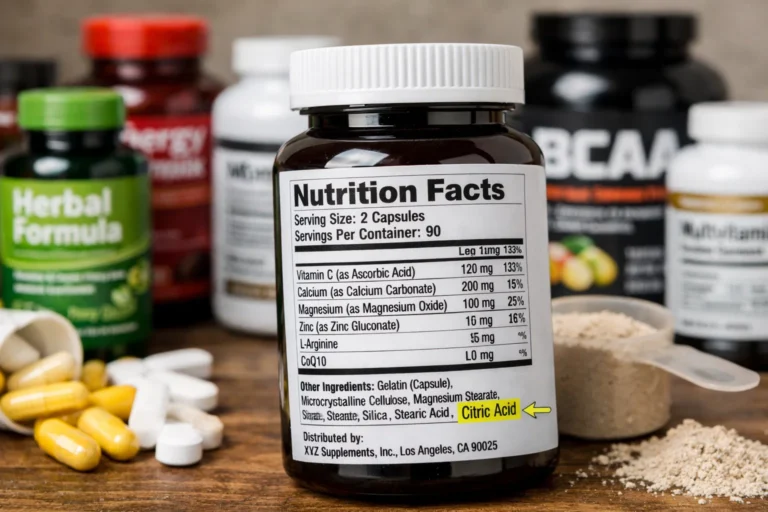
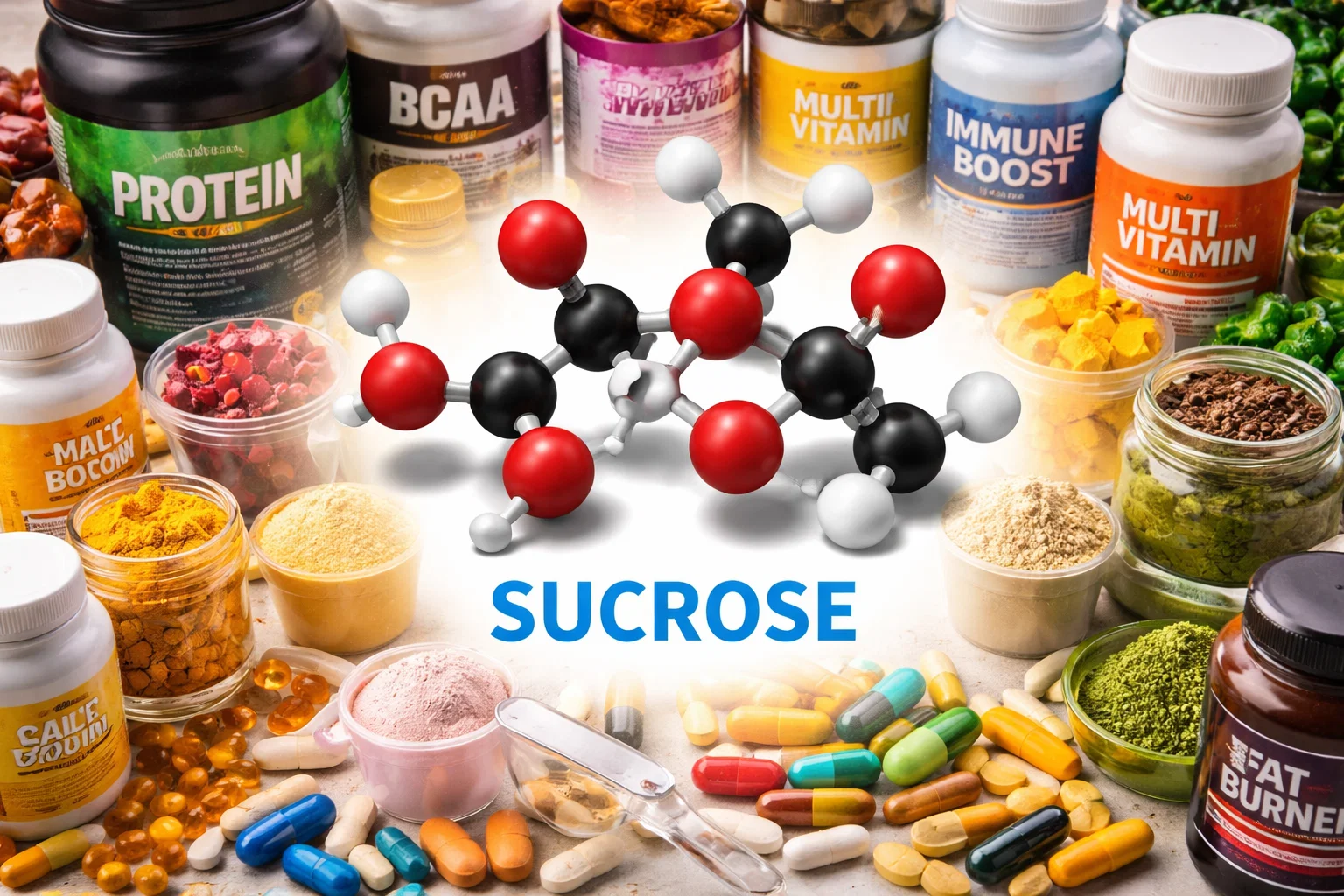
Sucrose in Supplements: Benefits, Uses, and What You Should Know
Sucrose is a disaccharide carbohydrate made of two simple sugars: glucose and fructose. It occurs naturally in plants such as sugar cane and sugar beet and is widely used in the food and supplement industries as a sweetener and energy source.
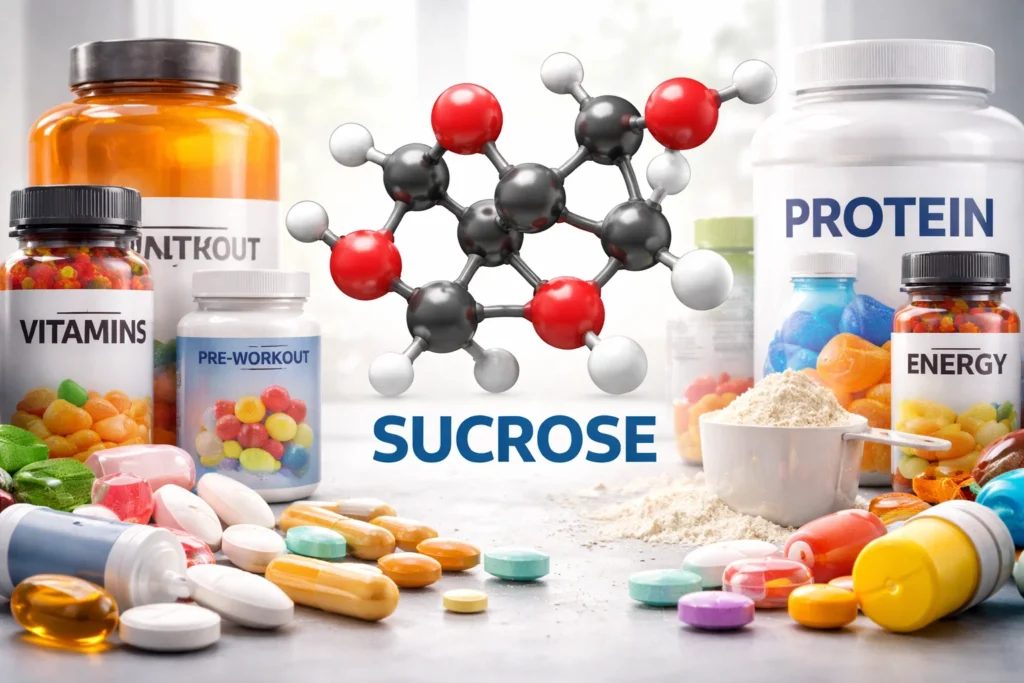
sucrose In supplements is typically added in controlled amounts to improve taste, solubility, and carbohydrate delivery. In this article, we break down what sucrose is, why it’s used in supplements, its benefits, potential drawbacks, and whether it’s right for your fitness goals.
Table of Contents
Why Sucrose in Supplements?
Supplement manufacturers include sucrose for several important reasons:
- Improved taste and palatability, especially in powders and liquids
- Quick energy supply, useful in pre-workout and intra-workout formulas
- Better absorption, as glucose helps transport certain nutrients
- Cost-effective formulation, compared to some alternative sweeteners
Sucrose is commonly found in:
- Pre-workout supplements
- Electrolyte and hydration blends
- Weight gainers
- Energy gels and endurance formulas
Comparison of Glycemic Load and Glycemic Index of Sugars Used in Supplements
The type of sugar used in a dietary supplement directly affects how quickly blood sugar rises, energy availability, and insulin response. The table below compares sucrose (table sugar) with the main carbohydrates commonly used in the supplement market, highlighting their glycemic index (GI) and glycemic load.
Comparative Table: Glycemic Index and Glycemic Load
| Ingredient | Type of Carbohydrate | Glycemic Index (GI)* | Glycemic Load | Main Use in Supplements |
|---|---|---|---|---|
| Glucose / Dextrose | Monosaccharide | 100 | Very high | Post-workout, rapid recovery |
| Sucrose (Table Sugar) | Disaccharide | ≈ 65 | High | Pre-workout, endurance |
| Maltodextrin | Polysaccharide | 85–105 | Very high | Mass gain, quick energy |
| Fructose | Monosaccharide | 15–25 | Low | Slow energy (often combined with glucose) |
| Isomaltulose (Palatinose®) | Disaccharide | 30–35 | Moderate | Endurance, stable energy |
| HBCD (Highly Branched Cyclic Dextrin) | Polysaccharide | 40–50 | Moderate | Premium intra-workout |
| Glucose Syrups | Mixed carbohydrates | 70–100 | High | Energy drinks |
| Sucralose / Stevia | Sweeteners | 0 | None | Flavor only, no energy |
*GI values are based on glucose = 100
Interpretation and Role of Sucrose
Sucrose has a moderate glycemic index (~65), placing it between fast sugars like glucose and slower sources like isomaltulose. Due to its composition of glucose + fructose, sucrose provides rapidly available energy while being generally better tolerated than some high-GI carbohydrates when consumed during exercise.
In dietary supplements, sucrose is particularly suited for pre-workout and endurance formulas, where a controlled blood sugar rise is desired. Conversely, its use is less relevant in health-focused, weight loss, or daily-use supplements, where a rapid glycemic spike is not necessary.
Le sucrose se situe entre les glucides rapides et lents. Il offre une montée glycémique contrôlée, ce qui explique son utilisation fréquente dans les compléments énergétiques et d’endurance, mais son intérêt est limité dans les formules santé ou perte de poids.
Benefits of Sucrose in Sports Supplements
- Improved Taste and Consistency: A pleasant flavor profile increases user compliance, making athletes more likely to take supplements consistently.
- Fast Energy Availability: Sucrose delivers rapidly digestible carbohydrates, providing quick energy for athletes during intense training sessions or competition.
- Supports Workout Performance: When consumed before or during exercise, sucrose helps maintain blood glucose levels, delays fatigue, and supports endurance performance.
- Enhances Nutrient Uptake: The glucose component of sucrose aids in the transport of amino acids and electrolytes, improving nutrient absorption and overall supplement effectiveness.
Supplements That Should NOT Contain Sucrose
While sucrose can be useful in performance and endurance supplements, there are several supplement categories where its presence is unnecessary or undesirable.
Supplements That Should Avoid Sucrose
1. Fat Burners & Weight Loss Supplements
Sucrose adds calories and may spike insulin, which can counteract fat-loss goals. Products marketed for cutting or weight management should ideally be sugar-free.
2. Sleep & Relaxation Supplements
Ingredients like magnesium, melatonin, or herbal extracts (ashwagandha, valerian) do not require fast carbohydrates. Sucrose may interfere with sleep quality when consumed at night.
3. Blood Sugar & Metabolic Health Supplements
Supplements designed to support glucose control, insulin sensitivity, or diabetes management should never contain sucrose.
4. Daily Multivitamins & Micronutrient Capsules
There is no functional reason for sucrose in tablets or capsules intended for daily health maintenance.
5. Low-Carb, Keto, or Diabetic-Friendly Supplements
Sucrose is incompatible with ketogenic and low-carb dietary approaches and should be clearly avoided.
Potential Side Effects of Sucrose in Supplements
When consumed in excessive amounts or at the wrong time, sucrose may cause unwanted effects:
- Rapid blood sugar spikes followed by energy crashes
- Increased fat storage when total calorie intake is high
- Gastrointestinal discomfort (bloating, cramps) in sensitive individuals
- Dental health issues with frequent liquid or chewable supplements
- Reduced insulin sensitivity over long-term excessive intake
These effects are dose-dependent, not inevitable.
Recommended Daily Intake of Sucrose (From Supplements)
There is no official recommended dose specifically for sucrose in supplements, but sports nutrition research provides practical guidelines.
✅ General Guidelines
- Sedentary individuals:
→ Avoid sucrose-containing supplements altogether - Recreational training (≤60 min):
→ 5–15 g during training (optional) - Endurance or high-intensity training (>90 min):
→ 30–60 g total carbohydrates per hour
→ Sucrose may contribute part of this intake - Elite endurance athletes:
→ Up to 90 g carbs/hour (from mixed sources, including sucrose)
⚠️ Important: Sucrose intake from supplements should be counted within total daily added sugar intake, not consumed blindly.
Is Sucrose Bad in Supplements?
Sucrose itself is not harmful when used in moderation. In performance-focused supplements, it can be a functional and effective ingredient, especially when consumed around physical activity.
Problems arise when sucrose is:
- Present in excessive amounts
- Hidden in products marketed as “clean” or “sugar-free”
- Consumed frequently outside of training contexts
Each sweetener serves a different purpose depending on the supplement’s goal.
Should You Choose Supplements with Sucrose?
Supplements containing sucrose may be a good choice if you:
- Train at high intensity
- Need fast carbohydrates
- Use supplements before or during workouts
You may want to avoid or limit sucrose if you:
- Are managing blood sugar levels
- Follow a low-sugar diet
- Use supplements outside training windows
Final Verdict
Sucrose is a functional, well-understood ingredient in dietary supplements. When used responsibly, it can support performance, energy levels, and supplement effectiveness. As always, the best approach is to check the label, understand the dosage, and match the supplement to your fitness goals.
Scientific References
Foster-Powell, K., Holt, S. H., & Brand-Miller, J. C. (2002)
International table of glycemic index and glycemic load values.
American Journal of Clinical Nutrition, 76(1), 5–56.
→ Reference for glycemic index values used in your comparison table.
Jeukendrup, A. E. (2013)
Is there a specific role for sucrose in sports and exercise performance?
Sports Medicine, 43(2), 113–119.
→ Supports the use of sucrose as an effective carbohydrate source in endurance and performance supplements.
Jeukendrup, A. E. (2014)
A step towards personalized sports nutrition: carbohydrate intake during exercise.
Sports Medicine, 44(Suppl 1), S25–S33.
→ Explains carbohydrate types, absorption, and performance benefits during exercise.
Thomas, D. T., Erdman, K. A., & Burke, L. M. (2016)
Position of the Academy of Nutrition and Dietetics, Dietitians of Canada, and the American College of Sports Medicine: Nutrition and Athletic Performance.
Medicine & Science in Sports & Exercise, 48(3), 543–568.
→ Reference for carbohydrate intake recommendations (30–60 g/hour, up to 90 g/hour).
World Health Organization (WHO) (2015)
Guideline: Sugars intake for adults and children.
→ Supports statements about limiting added sugars, side effects, and daily intake thresholds.
EFSA Panel on Nutrition, Novel Foods and Food Allergens (2022)
Dietary sugars and health outcomes.
EFSA Journal, 20(2).
→ Scientific basis for metabolic and glycemic concerns related to excessive sugar intake.
Coyle, E. F. et al. (1996)
Carbohydrate feeding during prolonged strenuous exercise.
International Journal of Sports Nutrition, 6(2), 136–150.
→ Supports claims about blood glucose maintenance and endurance performance.

With a Bachelor’s in Biology and Health and a Master’s degree in Quality Control of Foods and Drugs, I review dietary supplements using scientific analysis, ingredient verification, and safety standards to provide transparent and reliable recommendations.